Enjoy helpful home buying and selling tips as well as market updates, community events and local love.

Nov. 25, 2024

Preparing to Apply for a Home Loan

Here's a guide to help you get ready

Preparing to apply for a home loan involves several steps to ensure you present a strong application, get the best interest rates, and improve your chances of approval. Here's a guide to help you get ready:


1. Check and Improve Your Credit Score

Obtain Your Credit Report: Get a free copy of your credit report from major credit bureaus (Experian, Equifax, TransUnion). Check for any errors or discrepancies that could negatively impact your score.


Improve Your Credit: Pay down credit card balances, avoid opening new credit accounts, and make all payments on time. The higher your credit score, the better interest rates you’re likely to receive.


Monitor Your Score: Aim for a credit score of at least 620, though scores above 700 often qualify for more favorable loan terms.


2. Reduce Debt-to-Income Ratio (DTI)

Understand DTI: Lenders look at your DTI ratio to determine your ability to manage monthly payments. It’s the percentage of your monthly gross income that goes toward paying debts.


Pay Off Debt: Reduce your debt load by paying off or paying down credit cards, student loans, or personal loans. A lower DTI ratio (ideally below 43%) will improve your chances of approval.


3. Save for a Down Payment and Closing Costs

Down Payment: Depending on the loan type, you’ll typically need to save 3%-20% of the home’s purchase price. Larger down payments can help you secure lower interest rates and avoid private mortgage insurance (PMI).


Closing Costs: Closing costs can range from 2% to 5% of the loan amount. Be prepared to cover these out-of-pocket expenses when finalizing the home purchase.


Emergency Fund: Lenders like to see that you have additional savings as a safety net in case of unexpected expenses.


4. Get Pre-approved for a Loan

Pre-qualification vs. Pre-approval: Pre-approval is more comprehensive and involves a credit check and financial review by the lender. It provides a more accurate picture of what you can afford and strengthens your position when making an offer.


Documents Needed: Prepare documents such as proof of income (pay stubs, tax returns, W-2 forms), bank statements, employment history, and other financial information.


5. Understand Different Loan Types

Conventional Loans: Typically require higher credit scores and down payments but often have lower interest rates.


FHA Loans: These are insured by the Federal Housing Administration and require lower down payments and credit scores, making them suitable for first-time buyers.


VA Loans: Available to eligible veterans and service members, requiring no down payment and no PMI.


Adjustable vs. Fixed Rate: Decide if you want an adjustable-rate mortgage (ARM) or a fixed-rate mortgage. Fixed rates stay the same for the life of the loan, while ARMs can vary.

6. Establish a Stable Employment History

Employment Consistency: Lenders generally prefer a stable employment history (usually two years or more with the same employer or within the same field).


Income Verification: Ensure that your income documentation is up to date and easy to verify. If you’re self-employed, expect to provide additional documentation like tax returns for the past two years.


7. Calculate Your Budget

Determine Affordability: Use an online mortgage calculator to estimate monthly payments, including taxes and insurance. Ensure that the mortgage payment, combined with other debts, fits comfortably within your monthly budget.


Estimate Additional Costs: Don’t forget to include property taxes, homeowners insurance, and maintenance costs when determining affordability.


8. Avoid Major Financial Changes

Avoid New Debt: Don’t open new credit accounts or make large purchases before applying for a mortgage, as it can negatively affect your credit score and DTI ratio.


Hold Off on Job Changes: Switching jobs right before or during the application process can make it harder for lenders to assess your stability. Try to avoid changing jobs until after your loan is approved.

9. Gather Necessary Documentation

Income Proof: Recent pay stubs, tax returns, and W-2 forms.


Bank Statements: At least two months of bank statements to show assets and account history.


Debt and Asset Information: Documentation of any outstanding loans, credit card debt, and assets like retirement accounts.


ID Verification: Government-issued ID and social security number.

10. Shop Around for Lenders

Compare Offers: Different lenders offer different interest rates, fees, and terms. Get multiple quotes to ensure you’re getting the best deal.


Negotiate: Don't be afraid to negotiate origination fees or other costs. Even small changes in rates or fees can make a big difference over the life of the loan.


Understand Mortgage Terms: Familiarize yourself with terms like interest rate, annual percentage rate (APR), origination fees, and points to make informed comparisons.


By following these steps, you can prepare for a smoother mortgage application process and increase your chances of getting favorable terms. The more effort you put into preparation, the more likely you’ll secure the home loan you want at a rate that fits your financial situation.


Posted in Buying A Home Tips
Nov. 25, 2024

What is the MLS in Real Estate and How Does It Work?

What is the MLS in Real Estate and How Does It Work?

For anyone buying or selling a home, the Multiple Listing Service (MLS) is a key resource that simplifies and organizes the process. But what exactly is the MLS, and how does it benefit both buyers and sellers? This blog will dive into the MLS, explaining what it is, how it works, and why it’s such an important part of the real estate industry.


What is the MLS?

The Multiple Listing Service (MLS) is a comprehensive database used by real estate agents and brokers to list properties for sale. It’s a system that enables real estate professionals to share property listings with one another to expand their reach, making it easier to match buyers with sellers. MLS databases are usually regional, and there are hundreds of individual MLSs across the U.S. that operate as independent entities. Each MLS is tailored to a specific geographical area, ensuring accurate and relevant listings for that local market.


How Does the MLS Work?

The MLS serves as a centralized hub for property listings. Here’s a step-by-step overview of how it works:


Agents and Brokers Add Listings: When a real estate agent or broker gets a property listing, they input detailed information about the property, including its location, price, features, square footage, and photos, into the MLS.


Information Sharing: The listing is then shared with other agents and brokers within the MLS network. This gives all professionals within that network access to the property, allowing them to bring in potential buyers even if they aren’t the listing agent.


Data Syndication to Public Platforms: Although the MLS itself is not typically accessible to the general public, much of the data in the MLS is syndicated to popular real estate websites like Zillow, Realtor.com, and Redfin. This way, buyers and sellers have greater access to listings, even if they don’t have MLS access themselves.


Buyer Agents Use MLS Data: Agents working with buyers search the MLS for properties that meet their clients' criteria. With robust filtering and search options, agents can find homes that match specific needs, whether it’s a certain neighborhood, square footage, or price range.


Facilitating Transactions: The MLS also provides essential data on properties that have recently sold, helping both buyers and sellers understand current market trends and values. This data is crucial for setting competitive prices and making informed offers.


Why the MLS is Important for Buyers and Sellers

The MLS offers distinct advantages for both parties in a real estate transaction:


For Buyers: Buyers benefit from access to a wide range of properties and up-to-date information about new listings. Working with an agent who has access to the MLS means buyers see all available homes in their target area, often as soon as they’re listed.


For Sellers: Listing on the MLS means maximum visibility for a property. Because MLS listings are syndicated to major real estate websites, sellers gain a broader reach and greater exposure, attracting a wider pool of buyers.


Key Benefits of the MLS

Increased Market Exposure: The MLS connects a property with all the agents in a given region, creating a much larger pool of potential buyers.


Accurate, Up-to-Date Listings: Unlike some public sites where listings may be outdated, the MLS is updated regularly, ensuring that agents and buyers are viewing accurate information.


Historical Data and Market Insights: MLS databases keep records of past listings and sale prices, which agents can use to conduct comparative market analyses (CMAs). This data is instrumental in helping sellers price their homes competitively and helping buyers understand fair market value.


Transparency and Security: The MLS has established guidelines to ensure that all listings contain accurate and honest information, which adds an extra layer of reliability.


Differences Between MLS and Public Listing Sites

It’s easy to think that websites like Zillow or Realtor.com are synonymous with the MLS, but they are not. Here are some of the main differences:


Access Control: Only licensed real estate professionals have direct access to the MLS, while public listing sites are accessible to everyone.


Data Accuracy: MLS listings are often more accurate and up-to-date than listings on public sites, which may lag in updates or display expired listings.


Data Depth: MLS entries often contain more detailed information about a property, including disclosures, private remarks for agents, and data on the property’s history.


How to Access the MLS

Because the MLS is a subscription-based tool for real estate professionals, individual buyers and sellers don’t typically have direct access. However, working with an agent grants you indirect access to the MLS’s vast resources. Agents can run tailored searches, share listing details, and provide clients with comprehensive data to help them make well-informed decisions.


The Future of the MLS

The MLS remains central to real estate transactions, but it continues to evolve. Some MLS platforms are working toward increased integration, allowing for better data sharing across regions. Technology is also expanding MLS functionalities, offering virtual tours, enhanced listing data, and mobile access to streamline the buying and selling experience.


Final Thoughts

The Multiple Listing Service is a powerful tool that brings organization, transparency, and broad market exposure to the real estate world. For buyers, it offers access to the most current listings. For sellers, it maximizes visibility. And for agents, it simplifies transactions by providing a reliable and comprehensive source of information.


Whether you’re buying, selling, or simply exploring the market, understanding the MLS is essential for navigating the real estate landscape confidently. Partnering with a knowledgeable agent who can leverage the MLS for your benefit can make all the difference in finding the perfect home or securing the best price for your property.

Contact me for more real estate news and information.


Laurel Jonas

208-758-9000

Northwest Realty Group

208HomesForSale@gmail.com

Nov. 18, 2024

How to Protect A Vacant Home When Selling

How to Protect A Vacant Home When Selling

Protecting a vacant home is crucial to prevent vandalism, break-ins, and potential damage from maintenance issues. Here are some effective strategies:


1. Secure the Property

Locks and Reinforcements: Ensure all doors and windows have high-quality locks. Consider installing deadbolts and reinforcing sliding doors with rods or tracks.


Alarm System: Install a security alarm system with window and door sensors. Many modern systems can alert you via smartphone.


Motion-Sensor Lights: Install outdoor motion-activated lights to deter intruders by illuminating the area when movement is detected.


2. Smart Home Technology

Video Surveillance: Install cameras around entry points and the perimeter. Smart cameras allow you to monitor activity remotely.


Smart Locks: Consider using smart locks to control access remotely if someone needs to enter, such as for maintenance.


3. Make the Home Look Occupied

Timers for Lights: Use timers to turn lights on and off at various times to create the illusion of occupancy.


Curtains or Blinds: Keep curtains or blinds slightly open so the home doesn’t look obviously vacant, but don’t allow a clear view of valuables.


Park a Car: If possible, keep a vehicle in the driveway or arrange for a neighbor to occasionally park there.


4. Regular Maintenance

Lawn Care: Hire someone to regularly mow the lawn or remove snow. Overgrown lawns or an unshoveled driveway are clear indicators that no one is home.


Mail and Deliveries: Put a hold on mail and packages or have someone collect them regularly so they don't pile up.

5. Neighborhood Watch

Inform Trusted Neighbors: Let a trusted neighbor know that the home is vacant. They can keep an eye out for suspicious activity.


Emergency Contact: Provide neighbors with your contact information or that of a property manager in case of emergencies.


6. Utilities and Interior Protection

Water System: Turn off the water supply to avoid flooding from leaks. Drain pipes if the home will be vacant during winter to prevent them from freezing and bursting.


Heat: Set the thermostat to a safe level to prevent freezing pipes or excessive humidity.


Unplug Appliances: Unplug unnecessary appliances to reduce the risk of electrical fires.

7. Insurance Coverage

Vacant Home Insurance: Check with your insurance company to ensure your homeowner's policy covers a vacant home. Standard policies often have limitations on vacant properties, so additional coverage may be necessary.


8. Install a Security Sign

Even if you don’t have a professional security system, placing security company signs and decals around the property can serve as a deterrent.


9. Reinforce Vulnerable Entry Points

Windows: Install security film or window locks to make windows harder to break or open.


Garage Doors: Secure garage doors with extra locks or disable the automatic opener to prevent unauthorized access.


10. Visit Regularly

Regular Check-ins: Visit the home periodically if possible, or hire someone to do it. Physical visits help to ensure everything is in good order and prevent small issues from becoming big problems.


By combining these measures, you can significantly reduce the risk of vandalism, theft, or damage to a vacant home.

Posted in Selling Tips
Nov. 4, 2024

How to Determine Your Budget for Buying a Home: A Step-by-Step Guide

step by step how to determine your budget to buy a home

Buying a home is an exciting milestone, but it can also be overwhelming—especially when it comes to figuring out your budget. Knowing how much you can afford ensures that you make a smart financial decision, one that aligns with your long-term goals. If you're ready to begin your homebuying journey but aren’t sure how to determine your budget, this guide will walk you through the key steps to establish a realistic price range.


1. Assess Your Financial Situation

Before diving into house listings, it’s important to take a close look at your current financial situation. This includes reviewing your income, expenses, savings, and debts. A clear understanding of where your money goes each month will help you figure out how much you can comfortably spend on a home.


Key things to review:

Monthly income: What is your total take-home pay (after taxes)?


Monthly expenses: How much do you spend on necessities like food, transportation, utilities, and discretionary spending?


Debt payments: Consider existing loans such as car payments, student loans, or credit card debt.


Having a clear picture of your financial situation allows you to determine how much of your income can be allocated to housing costs without straining your budget.

2. Understand the 28/36 Rule

One of the most widely used guidelines for home affordability is the 28/36 rule, which helps keep your debt and housing costs manageable. The rule suggests:


You should spend no more than 28% of your gross monthly income on housing costs (including mortgage payments, property taxes, and insurance).


You should spend no more than 36% of your gross monthly income on total debt, which includes housing costs plus any other debts (such as car loans, student loans, or credit cards).


For example, if your gross monthly income is $5,000, you should aim to spend no more than $1,400 on housing ($5,000 x 28%). Keeping within these limits ensures you won’t be overstretched financially.


3. Determine How Much You Have for a Down Payment

Your down payment is a critical factor in determining your homebuying budget. The more you can put down upfront, the smaller your mortgage will be, and the lower your monthly payments will be. Traditional down payments are often around 20% of the home’s purchase price, but some loan programs allow for lower down payments, sometimes as low as 3% or 5%.


For instance, if you’re aiming to buy a $300,000 home and have saved $60,000 for a down payment, that’s 20%. However, if you only have $15,000 saved, that’s a 5% down payment.


Tip: Keep in mind that a larger down payment can help you avoid private mortgage insurance (PMI) and potentially secure a lower interest rate on your loan.

4. Factor in Additional Costs

Many homebuyers focus solely on the mortgage payment, but there are several other costs to consider. Understanding the full picture of homeownership expenses is essential for determining how much you can afford.


Additional costs to budget for:

Property taxes: Vary by location, so research rates in your desired area.


Homeowners insurance: Protects your home from damage and is typically required by lenders.


HOA fees: If you’re buying in a community with a homeowners association.


Maintenance and repairs: Homes require ongoing upkeep, so budget for unexpected repairs and routine maintenance.


Closing costs: These include fees for appraisal, title insurance, and legal services, often amounting to 2%-5% of the home’s purchase price.


By accounting for these extra expenses, you’ll avoid any surprises after closing and be better prepared for the total cost of homeownership.


5. Get Pre-Approved for a Mortgage

Once you have a good idea of your financial situation and homebuying budget, the next step is to get pre-approved for a mortgage. A pre-approval is an official estimate from a lender of how much you can borrow based on your income, credit score, and financial history. While this doesn’t guarantee you’ll be approved for that exact amount, it gives you a concrete starting point.


Having a pre-approval letter in hand can also strengthen your offer when you’re ready to buy, as it shows sellers that you’re a serious and qualified buyer.


6. Consider Future Financial Goals

When determining your homebuying budget, it’s essential to consider not just your current financial situation, but also your future goals. Are you planning to start a family, buy a new car, or save for retirement? Ensure that the home you buy leaves room in your budget for these goals.


Avoid the temptation to max out your budget, as homeownership comes with its own set of financial responsibilities. Leaving some breathing room in your finances will allow you to enjoy your new home without feeling financially overwhelmed.


Conclusion

Determining your homebuying budget is a crucial first step in the homeownership process. By thoroughly assessing your financial situation, understanding key guidelines like the 28/36 rule, and factoring in additional costs, you’ll be able to set a realistic budget that aligns with your long-term goals. Getting pre-approved for a mortgage and considering future expenses will further ensure you make a wise investment.


Buying a home is a significant financial commitment, but with careful planning and budgeting, you’ll be able to find a home that fits your needs and lifestyle comfortably.


With these steps, you'll be better equipped to make an informed decision and confidently start your search for the perfect home!


Posted in Buying A Home Tips
Nov. 4, 2024

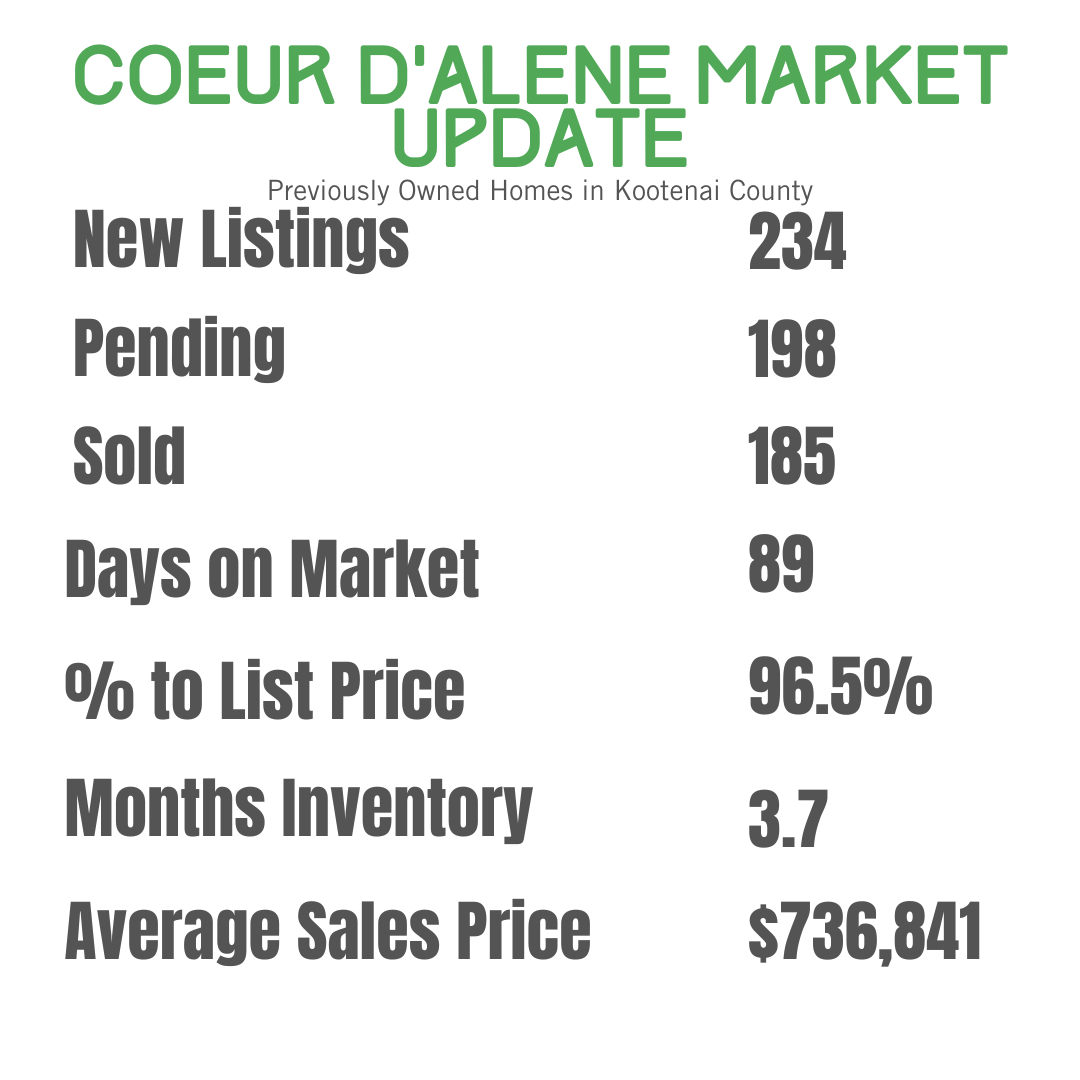
Coeur d'Alene Idaho Real Estate Market Update October 2024

Coeur d'Alene Idaho Real Estate Market Update October 2024

➡️New Listings: 234 Up 7.3%

➡️Pending sales: 198 Up 32.9%

➡️Closed Sales: 185 Down 2.1%

➡️Days on Market Until Sold: 89 Up 12.7%

➡️Percent to List Price Received: 96.5% Down .1%

➡️Months of Inventory: 3.7% Stayed the same 0.00%

➡️Average Sales Price: $736,841 Down 5.8%


👉Stats are compared to October 2024- Previously owned properties only in Kootenai County.️

For more Coeur d'Alene Idaho Real estate market information, please call, text or email me.


Laurel Jonas

208-758-9000

208HomesForSale@gmail.com

Northwest Realty Group

Posted in Market Updates
Oct. 28, 2024

Understanding Escalation Clauses in Real Estate: How They Work and When to Use Them

Understanding Escalation Clauses in Real Estate: How They Work and When to Use Them

In today’s competitive real estate market, buyers often face multiple-offer situations where a property receives numerous bids. In such scenarios, an escalation clause can be a powerful tool to help buyers stand out. But what exactly is an escalation clause, and how does it work? This blog will explain escalation clauses in real estate, when they’re beneficial, and how to use them effectively.


What Is an Escalation Clause?

An escalation clause is a provision added to a buyer’s offer on a home that automatically increases the offer price by a set increment if a competing offer comes in higher. It allows buyers to stay competitive without constantly resubmitting offers and ensures the seller considers their offer seriously even in the face of multiple bids.


For instance, a buyer might offer $500,000 for a home with an escalation clause that increases their bid by $5,000 over any competing offer, up to a maximum of $550,000. If another buyer offers $505,000, the escalation clause would kick in, automatically raising the initial offer to $510,000.


Key Components of an Escalation Clause

An escalation clause typically includes:


Starting Offer: This is the initial amount the buyer is willing to pay.


Incremental Increase: The amount the buyer is willing to add to their bid in response to competing offers, such as $5,000.


Cap or Maximum Price: The highest price the buyer is willing to pay, even if other offers exceed it.


This structure allows buyers to make a competitive offer without overspending beyond their comfort level.


When to Use an Escalation Clause

Escalation clauses are not appropriate for every situation but can be valuable in highly competitive markets. Here’s when to consider one:


Multiple Offers Expected: If a property is highly desirable and likely to attract multiple offers, an escalation clause can help keep your offer at the top.


Strong Desire for the Property: If the buyer has strong motivation to secure the specific property, they may be more willing to escalate their offer.


Knowledge of Comparable Property Prices: Buyers should be confident that their maximum offer cap aligns with the market value for similar properties to avoid overpaying.

Benefits of an Escalation Clause

Enhanced Competitiveness: An escalation clause keeps a buyer’s offer competitive without the hassle of constantly renegotiating.


Prevents Overpaying: Since buyers set a maximum cap, they won’t exceed what they feel the home is worth.


Simplifies Bidding: Buyers don’t need to reenter the bidding process with each new offer, streamlining the transaction.


Potential Drawbacks

While beneficial, escalation clauses do come with potential downsides:


May Reveal Buyer’s Maximum Budget: Sellers can see the buyer's cap, which may put the buyer at a disadvantage if the seller pushes for the maximum.


Complexity in Negotiations: Some sellers may view escalation clauses unfavorably, preferring straightforward offers instead.


Risk of Overpaying: If the clause pushes the price beyond comparable market value, the buyer could end up paying more than they intended.


How Sellers View Escalation Clauses

Some sellers appreciate escalation clauses, as they ensure competitive bidding without back-and-forth negotiations. However, others may see it as a lack of commitment or as overly complex. Sellers may also require proof of other offers to trigger the escalation clause, adding another layer of scrutiny.


Example of an Escalation Clause in Action

Let’s walk through a simple scenario:


Buyer A submits an offer of $500,000 with an escalation clause that will increase the offer by $5,000 over any competing bid, up to a maximum of $550,000.


Buyer B submits an offer of $510,000 without an escalation clause.


With Buyer A’s clause, their offer would automatically increase to $515,000, keeping them in the lead unless Buyer B comes back with a higher offer.


Key Considerations for Buyers and Sellers

Buyers: Consult with your real estate agent to assess whether an escalation clause fits your strategy. Be mindful of your cap to avoid emotional bidding wars that could inflate the final price.


Sellers: If you receive offers with escalation clauses, consider requesting proof of funds for each new bid increment and confirming whether the buyer’s financing covers the increased amount.


Final Thoughts

An escalation clause can give buyers a valuable edge in competitive markets but should be used with a clear strategy. By setting a clear maximum and understanding local market values, buyers can leverage escalation clauses effectively while staying within their budget. For sellers, understanding escalation clauses can help maximize offers without necessarily creating extended negotiations. Both parties should work closely with their agents to ensure the clause aligns with their goals and market expectations.


Escalation clauses are not a one-size-fits-all solution but, when applied wisely, can help create a win-win outcome in a fast-moving real estate market.

Posted in Buying A Home Tips
Oct. 3, 2024

Coeur d'Alene ID real estate market update September 2024

Coeur d'Alene ID real estate market update September 2024

➡️New Listings: 284 Up 6%

➡️Pending sales: 212 Up 11%

➡️Closed Sales: 182 Down .05%

➡️Days on Market Until Sold: 82 Up 9.3%

➡️Percent to List Price Received: 97% Down .6%

➡️Months of Inventory: 4.4% Up 7.3%

➡️Average Sales Price: $752,380 Down 5.5%


👉Stats are compared to September 2023- Previously owned properties only in Kootenai County.️

For more Coeur d'Alene Idaho Real estate market information, please call, text or email me.


Laurel Jonas

208-758-9000

208HomesForSale@gmail.com

Northwest Realty Group

Posted in Market Updates
Sept. 25, 2024

What Is Escrow?

What is Escrow_Laurel Jonas blog

What Is Escrow?

When it comes  to where mortgages are concerned, "escrow" and "escrow accounts" refer to two slightly different concepts. Escrow is the process by which a neutral third party mediates a real estate deal, holding money and property "in escrow" until the two sides agree that all the conditions are met for a sale to close. By contrast, an escrow account is usually an account that helps to manage a mortgage borrower's annual tax and insurance costs.

What Does Escrow Mean?

Escrow refers to a third-party service that's usually mandatory in a home purchase. When a buyer and seller initially arrive at a purchase agreement, they select a neutral third party to act as the escrow agent. The escrow agent collects what is known as "earnest money" from the buyer: a deposit that is equal to a small percentage of the sale price. In exchange, the seller takes the property off the market. Until the final exchange is completed, both the buyer's deposit and the seller's property are said to be in escrow.

Escrow "accounts" have more to do with your monthly mortgage payment than the initial home purchase. When you borrow money from a bank or a direct mortgage lender, you'll usually be given an escrow account. This account is where the lender will deposit the part of your monthly mortgage payment that covers taxes and insurance premiums. By collecting a fraction of those annual costs each month, the escrow account reduces the risk that you'll fall behind on your obligations to the government or your insurance provider.

How Do Escrow Accounts Work?

When you obtain a mortgage loan from a bank or direct lender, you also receive an escrow account that helps you pay your property taxes and homeowner's insurance premiums on time. Even though these costs are paid on an annual basis, your lender will require you to pay a monthly fraction towards each cost and accumulate the balance in your escrow account. This ensures that these expenses get paid on time every year.

Mortgage lenders require borrower escrow accounts in order to minimize the risk that you fall short of your financial obligations as a homeowner. In a foreclosure, unpaid taxes or insurance can result in liens that make it harder for the mortgage lender to recover the original loan. This creates a strong incentive for lenders to keep their borrowers on track with escrow accounts that smooth out the non-mortgage costs of owning a home.

Although escrow accounts conveniently allow lenders to pay the relevant taxes and insurance premiums on your behalf, they do have some drawbacks for the borrower. Lenders often require you to a keep a minimum balance in your escrow account to protect against any unexpected cost increases. The usual rule requires a minimum of two months' expenses on your mortgage escrow account, though the limit can be higher on riskier mortgages. Lenders usually review your escrow account once a year to make sure that the calculated payments are keeping up with costs.

How Much Do Escrow Fees Cost?

Just like any other service provider involved in a real estate deal, the escrow agent will need to be paid a fee. Escrow services for a home purchase typically cost 1% to 2% of the final price. Based on national median home values, this translates to a fee of $2,000 to $4,000, which is added into your other closing costs. However, escrow fees are one of the many expenses that are negotiable between the buyer and seller. This means that you can try asking the other party to foot part or even all of the escrow fee, depending on local rules or the current market conditions.

If you're buying, you'll also need to deposit between 1% to 3% of the final sale price in a joint escrow account with the intended seller. This earnest money serves as proof that you're serious about following through with the sale, and it obligates the seller to take the property off the market while the transaction gets finalized. When you complete the transaction, the earnest money you put into escrow will be applied towards your down payment on the house. Earnest money in escrow isn't a fee, but you should be wary of the fact that it's possible to forfeit that money if you can't come to a final agreement with the seller.

When is Escrow Needed in a Mortgage?

Escrow plays a role in both your initial home purchase and the ongoing monthly mortgage payments that follow. In a purchase, the escrow process provides certain guarantees to both the buyer and the seller. Once the two parties agree on a sale, a neutral third party—a bank, title company or attorney—will receive the signed purchase agreement so that it act as the escrow agent. Escrow agents exist to monitor and help fulfill the conditions of the sale, such as the buyer's "earnest money" deposit for a percentage of the sale price.

TYPICAL COMPONENTS OF ESCROW IN REAL ESTATE

Buyer Must Provide…

  • earnest money towards down payment
  • proof of mortgage loan approval

Seller Must Provide…

  • access to property for inspections
  • required repairs or renovations
  • inspection of title

Once a property is "in escrow", neither the buyer nor the seller will receive anything from the escrow company until all the conditions of the purchase agreement are met. For example, you might agree to purchase an older home on the condition that the building pass a safety inspection. Other common escrow conditions include repairs and property tax audits. Meanwhile, the buyer's earnest money proves to the seller that the buyer has both the intent and the ability to complete the purchase. Earnest money can be forfeited to the seller if the buyer backs out or fails to hold up the terms of the contract.

Escrow agents are also responsible for distributing money to parties other than the buyer and seller. These can include commissions to the real estate agent, prepaid mortgage interest to the lender, recording fees to the county office of records and the escrow agent's own fee. In this sense, escrow greatly simplifies the homebuying experience: without it, you'd be held responsible for sending timely and accurate payments to each and every party involved in the transaction.


Laurel Jonas

Northwest Realty Group

208homesforsale@gmail.com

208homesforsale.com

Sept. 5, 2024

Coeur d'Alene ID real estate market update August 2024

Coeur d'Alene area real estate market update August 2024

➡️New Listings: 349 Up 3.9%

➡️Pending sales: 208 Up 11.8%

➡️Closed Sales: 207 Down 3.3%

➡️Days on Market Until Sold: 74 Up 10.4%

➡️Percent to List Price Received: 97.9% Down .1%

➡️Months of Inventory: 4.7% Up 6.8%

➡️Average Sales Price: $723,026 Down 5.5%


👉Stats are compared to August 2023- Previously owned properties only in Kootenai County.️

For more Coeur d'Alene Idaho Real estate market information, please call, text or email me.


Laurel Jonas

208-758-9000

208HomesForSale@gmail.com

Northwest Realty Group

Posted in Market Updates
Sept. 2, 2024

5 Painting Mistakes to Avoid

5 Painting Mistakes to Avoid_Laurel Jonas blog

5 Painting Mistakes to Avoid

DIY interior painting can be a money-saver if you know what you’re doing. While saving a few dollars is definitely worth trying out painting yourself, it is important to avoid mistakes often made in the process. Here is how to avoid them!

Mistake #1: Not Using The Correct Applicator

If you are willing to pay for premium paint, you should be willing to invest in a good applicator. Invest in good brushes or rollers up front to avoid hair on the wall or lumps of roller lint under the paint.

Mistake #2: Not Preparing Correctly

You always want to do repair work first so that your walls are smooth, clean, dry and free of loose debris before you begin painting. A repair will be much less obvious if it is done before a new coat of paint!

Mistake #3: Overextending Your Brush Dips

One of the most frequently made mistakes by DIYers is that they often continue applying a dip of paint until the brush or roller is dry. When you overextend each dip, the paint can dry in the brush bristles, and the fabric on rollers can mat down. You want to maintain a smooth line of paint. Once you can see the paint starting to break up, it’s time to re-dip.

Mistake #4: Breath Interference

Your breathe when painting can impact the steadiness of your hand. When cutting in near edges or other times when you need to be precise, you should hold your breath or breathe out to limit your movement as much as possible.

Mistake #5: Allowing Paint To Dry Out

Touch-ups are not ideal if your paint has dried out. To extend the life of water-based paint, place a piece of clear plastic wrap directly on the surface of the paint, then reseal the container. For oil-based paint, add about a half-inch of water on the surface before resealing.


Laurel Jonas

Northwest Realty Group

208homesforsale@gmail.com

208homesforsale.com

Posted in Home Tips