Enjoy helpful home buying and selling tips as well as market updates, community events and local love.

Oct. 17, 2022

How to Get Started in Real Estate Investing


It seems like more and more people are investing in real estate lately. Is this the right time to try it for yourself? If all goes well, investing in property can help you build wealth and generate passive income. But this endeavor requires careful planning, of course, and not everyone is able to achieve the profits they’re looking for.


Are you considering venturing into the world of real estate investing? Here’s what to consider before getting started.


Define Your Goal

Are you looking for passive income? Long-term wealth? Or do you want a place you can rent out and occasionally use for vacationing? Your goal will ultimately determine the best investment strategy to pursue.


Set a Budget

How much can you afford to pay for the property? What about maintenance, repairs and other monthly costs? Have a good idea of the financials — both upfront and for the long haul — before making any moves.


Consider the Location

Real estate is all about location. You’ll want to choose where you purchase carefully, looking at market data like prices, rents and booking rates. (Reach out for help gathering this information.)  You should also consider how often you’ll need to be at the property. Will you need to pop by for repairs, or can you hire a property management company to do the work for you?


Prepare for Potential Challenges

There will likely be hurdles along the way, so do your best to anticipate them. What if a tenant stops paying rent or a short-term rental guest trashes your home? What if the property needs a big repair and you don’t have the cash? Create contingency plans for any issues you can think of.


Ready to find the perfect property to rent out or flip? Reach out to discuss what you’re looking for.


Laurel Jonas

208-758-9000

Northwest Realty Group

208HomesForSale@gmail.com

Posted in Buying A Home Tips
Oct. 17, 2022

How do you know when it's time to sell?


The housing market has stayed competitive for months, and if you’re like many property owners, you’ve probably thought about selling. But is this the right time?


Selling your home is a big decision, and pinpointing the perfect time to make your move can be challenging. Here are a few questions to consider if you want to explore what it would look like to put your home on the market soon.


Has your lifestyle changed? Most homeowners outgrow a property at some point, or they find their needs have changed in some way. A property might be too small, you may want to downsize, or you might want different amenities. 


Has your property increased in value? Homeowners have gained record-setting equity over the last few years. Determining your property value can give you an idea of your potential profits. Then, you can consider if you could put these funds to better use elsewhere.


Do you have another property or a plan for where you’ll go next? Be sure to keep the logistics and busy market conditions in mind if you’re buying and selling at the same time. 


Have you discussed the details with everyone involved? Selling your house isn’t something you should do on the spur of the moment. This sale will mean big changes, both financially and in your day-to-day life, so be sure everyone in your household is on the same page.


Have you established your goals (and communicated them clearly)? When you’re ready, let’s discuss your needs and wants and create a plan that makes sense for you. Once clear goals are established, we can work together to find what you’re looking for. 


Still not sure if it’s the right time to sell? Get in touch to discuss your options today.


Laurel Jonas

208-758-9000

Northwest Realty Group

208HomesForSale@gmail.com

Posted in Selling Tips
Oct. 11, 2022

10 Tips to Create the Ultimate Gaming Room

10 tips to create the ultimate gaming room_Laurel Jonas Blog

Video games are big. Like $155 billion big. In fact, it’s estimated that 26% of the world’s population are regular video gamers across various platforms. Given these statistics, it’s likely that you or someone you know is an active video game player.


Video game rooms are a great way to help get more immersed into a game, regardless of the platform. Depending on budget and space, a gaming room can allow you to bring in more computing power, louder and fuller sound, storage for all of your accessories and decals, and can give you an excuse to use that unused room in your home. Whether you’re playing Candy Crush in your bonus room or Fortnite in your small office space, here are 10 gaming room ideas for how to create the ultimate room on any budget.


1) Bring your gaming room idea to life: pick a theme and decide on decor

Before you start purchasing products or ripping down walls, it’s important to decide on an aesthetic or theme for the gaming room. It’s your chance to embrace your favorite game, character, or genre, and manifest your room around that. If you’re using art try to choose art that compliments the game such as a boutique poster and print resource. If you’re framing, make sure the frame contrasts the art – the contrast will make it pop.


Do you like Mario?

Try using a lot of reds and yellows, incorporate mushroom décor, and set up lights highlighting cool wall art and posters. Is Zelda your favorite? Focus more on greens and browns, memorabilia, and custom artwork. Fancy Call of Duty? Try embodying realistic art and camouflage colors throughout your room, and make sure your gaming setup is top tier. 


This first step is about brainstorming and being creative with your space. Choose something that you like and run with it. You want to be able to walk into your gaming room and feel inspired by simply being in your space.


2) Ensure you have a reliable internet connection

While this may sound obvious, it’s so important. Most games nowadays require an internet connection to play or at least have certain features that are unusable without one. Having a consistent connection will raise your gaming experience to the next level. 


While one gigabit (Gbps) and even 2 Gbps internet is all the rage nowadays, you don’t actually need very much internet speed to play an online video game. Most people agree that you only need a download speed of 5 Mbps or faster to enjoy the most a game has to offer. Removing the nagging worry of losing connection in the middle of a match or online chat is a huge boost to the effectiveness of your gaming room.


3) Incorporate tabletops, storage, renovation, and customization

Now that you’ve chosen a theme and have your internet all sorted, it’s time to make some larger changes and additions to your gaming room. This is the stage when you can tear down a wall, commission a custom-built desk or storage space, or purchase that desk you’ve had your eye on for months. The entire room is now yours to mold.


Desks: Your desk will likely be a centerpiece of your gaming room, so investing some extra time and money will make your room feel more like your own. There are many routes you can take depending on your space, but some common custom desk styles include:

  • Floating/wall-mounted
  • Standing/adjustable height 
  • Corner
  • Tall
  • Curved


If you have limited space, use a floating desk to allow for more storage. If you have more space, try a longer, curved desk for extra desktops and decals. If you are going the more expensive custom route, you can even incorporate many of the above styles into one unique desk. 


Other furniture options and gaming room customization ideas:

Shelving units, side tables, couches, custom display cases for your memorabilia, TV stands, and mirrors are just some of the other furniture options to consider. There are also countless room customization or renovation possibilities. Add or remove a window or wall, paint the walls, add new carpet, or do anything else your heart desires. 


It’s important that you conquer the big projects before moving on to the nitty-gritty. This process will vary widely depending on your budget, but even DIYing a floating shelf can add that extra touch of personality. 


Creating the ultimate gaming room should center around two vital components: comfort and organization. You want to select a comfortable chair with lumbar support for endless fun, and you want to ensure it’s easy to find your games and accessories. A sleek lateral open shelf cabinet allows you to store all your games and extra equipment while sticking with the aesthetic of the room.


4) Choose a perfect gaming seat

You’ll likely spend most of your time here between consoles and your desktop, so it should be the pinnacle of comfort and style. Spending time fidgeting or squirming trying to get comfortable only takes away from your high-level gameplay. 


There are loads of different gaming chair styles to choose from here, ranging from a standard desk chair, to a custom-fitted leather racer chair with magnetic armrests and an adjustable headrest, to a gaming armchair lounger. The main priority should be to get a good chair that will provide support throughout your gaming session. Purchase a chair that keeps you comfortable and allows you to focus for hours on end. Don’t feel the need to overstretch your budget; there are plenty of affordable options that provide comfort and longevity.


 5) Invest in quality displays

You’ll be looking at your displays for hours on end while you game, so choose carefully. There are three general choices to choose from: monitors, televisions, and projectors. Monitors benefit from their smaller size and versatility, while projection screens can enhance your experience by increasing immersion. Not only do projector screens give you a cinematic feel, but they are better for your eyes as well.


Projectors are generally best for much larger rooms and are hard to move from one room to another. TVs are the perfect option for those who like consoles and will be sitting farther away from the screen. However, since monitors tend to be the most popular, let’s take a close look at those. 


When it comes to monitors, there are four general quality aspects to take into account when choosing a monitor for your gaming room:


  • Size: This is the diagonal distance between opposite corners of the screen, i.e. a 13” laptop measures 13” from the top right of the screen to the bottom left. 
  • Resolution: This is what determines the sharpness of the image on your screen. The more pixels your screen has, i.e. 1920 x 1080, the better your resolution will be.
  • Refresh Rates: This describes the frequency that a display updates or “redraws” an onscreen image. The amount of refreshes per second is measured in Hz, i.e. a refresh rate of 144 Hz means the screen refreshes 144 times per second. The higher the better.
  • Price: Prices for monitors range from under $100 to $2000+. While the expensive monitors may look great, the lower end of the spectrum provides more than adequate quality. 


Typically, most would agree that size doesn’t matter as much as resolution or refresh rate, and most games will look great on your standard 1080p, 60Hz monitor. The newer Freesync and G-sync technologies produce better quality images, but are costly. Choose what specs fit your budget, and remember that higher numbers usually yield increasingly insignificant returns in performance.


When choosing a display, think about what type of games you play. Competitive gamers should focus on refresh rate and aim for a 120Hz or 144Hz display to stay ahead of the competition, while role-playing and story gamers should prioritize a 4K resolution for the sharpest graphics.


6) Craft your ultimate hardware setup

Are you a console fan? A desktop dueler? A VR wiz? Regardless, your gaming room needs gaming hardware. Consider a couple of options before splurging on a powerhouse setup. Style and price are also important.


Before you purchase your dream console, or before hiding them behind a cupboard, take your entire room into account. Don’t ignore the console’s or computer’s aesthetic value, and instead work them into the room. A console can be a statement piece that sits on top of a desk or TV unit. A computer can sit prominently, blending into your room’s theme. To level up your gaming room, let your hardware breathe freely.


Numbers are king when it comes to computer performance vs price. Consoles are generally fixed in their performance capabilities, but desktops and laptops can be built with specific specifications in mind. Keep an eye out for these metrics when buying a computer:


RAM/DRAM: Measured in GB, this is where short-term device memory is kept and determines how quickly a computer can function performing multiple tasks. A higher amount of RAM, e.g. 32GB, means that a computer can run multiple demanding tasks at once without reduced performance.


Storage: Think of this as long-term memory for your computer. Usually, a computer will have at least 256GB of storage.


Central Processing Unit (CPU): CPUs are made up of chips consisting of multiple cores that process most everything that runs your computer. Keep in mind that they can’t run anything on their own, and require quality RAM and storage to operate. Their power is measured in gigahertz (GHz).


Graphics Processing Unit (GPU): The GPU works in tandem with the CPU to accelerate computer graphics workloads. GPUs can either be built into a computer with the CPU or exist separately, allowing for customization.


Cooling capabilities: Demanding workloads result in the computer generating heat. Too much heat will reduce performance and can cause damage. There are a few ways to cool a computer, but the most common are air and liquid coolers.


In general, shoot for middle-of-the-road hardware. That is, unless you want to spend thousands of extra dollars to experience the pinnacle of performance and style. Pre-built computers are more expensive but more convenient. If you have the ability, customize your gaming computer to your heart’s content.


A budget of around $2800 is sufficient for purchasing a setup capable of playing any game and can accommodate streaming, VR, and video editing. For the ultimate gaming experience, consider a $4000+ RTX 3090 powered system. $1800 will provide the full gaming experience at a lower cost, although with reduced graphics capabilities.


7) Decide on a quality sound system

The audio quality that comes directly from a TV or laptop is generally poor. Adding external speakers will improve your audio exponentially. It adds dimensions to your sound that would otherwise be lost. Let’s look into some popular speaker styles.


Soundbars: Soundbars are the minimalist, stylish choice. The trade-off here is looks and price for sound quality relative to more traditional speaker styles. These fit easily into any gaming room.


Bookshelf speakers: These can be used with soundbars as an addition, or can be their own system. These typically come with more than two speakers and can provide quality surround sound. They can be rigged to provide a large gaming room with resonant sound.


Floorstanding speakers: These are usually large and expensive speakers with a powerful, full sound. They are heavy and obtuse, the opposite of soundbars.


Get Bluetooth speakers if possible for versatility, and try to coordinate the speaker style with your gaming room style. Many speakers have the ability to light up and can be custom-built if you’re willing to spend the extra money. 


8) Add soundproofing to your gaming room


Gaming is loud – it’s preferable that way – but you don’t want to get distracted or distract others in your home. Because of this, it’s a good idea to add soundproofing to your gaming room. Many materials and objects provide some soundproofing, but in general, it boils down to five strategies:


  • Soundproof insulation
  • Dampening seals
  • Wall panels
  • Rugs/carpeting/drapes
  • Soundproof paint
  •  

If you have the budget for it, include a mix of soundproof paint, thick doors, and custom panels to seamlessly blend strong soundproofing and interesting visuals into your gaming room. Panels and full-wall systems not only help with acoustics but also protect your walls from hits and impacts, and can be customized to your specifications. If you’re on a tighter budget, apply dampening seals on the cracks around your door/s and window/s and use a thick rug. After applying the soundproofing, this space can also double as a podcast space or music studio for you or anyone else in your home.


Whether it’s a basement or a bedroom, the right soundproofing is critically important for a gaming room. Soundproofing needs to serve two purposes: giving you the best possible audio quality inside the room while limiting noise emitting outside. Soundproof panels are a great option because they can be made from recycled materials and are easy to install. – SONOpan, soundproofing and wall modification experts.


9) Stock up on gaming room accessories

Who doesn’t like accessories? Customize your room to your heart’s content with a headset, gaming mouse, mechanical keyboard, figurines, microphones, charging ports, a gaming mouse pad, or whatever else you can think of. If you’re a streamer, make sure to grab a webcam as well. A pair of headphones can elevate any gaming room. To keep things organized, add a sleek and functional headphone stand to display your gaming headset when not in use. If you’re on a budget, just get what accessories are necessary. Anything that costs more than $150 is marginally better than a cheaper option. 


It’s all about the experience, and equipment is key. To help make you the best gamer you can be, you’ll want to find a lightweight mouse that fits your hand perfectly, a fast keyboard so you can make the right plays, and a quality headset to hear subtle sounds.


10) Incorporate lighting 

It’s time to spruce up your room and transform your space with home lighting. We aren’t talking about simple lamps and fluorescents. We’re talking about strip lighting, Bluetooth lightbulbs, backlights, custom-shaped panels, and hanging decals. Lighting can be the perfect addition to help create a gaming atmosphere. Correctly placed lighting not only creates a more aesthetically pleasing experience, it can help with eye strain too. Lighting may seem unnecessary, but it definitely adds to the aesthetic and quality of your room. These lights can also be synced up with your gaming computers, mouse, keyboard, and even headset to weave your entire room together into an RGB LED explosion.


Since all the suggested lighting uses LEDs, which consume less electricity, you’ll be able to save energy at home and avoid racking up your monthly bill. 


Although many people tend to game at night, sitting in the dark can cause headaches and eye strain. Using LED lights with a daylight color temperature can help prevent this. If you don’t want bright lights at all times, dimmable LED lights will allow you to adjust your game room aesthetic.


Your gaming room is your space – your home within your home. By following these 10 gaming room ideas, your room, big or small, will shine. Make it yours, regardless of budget. Above all, be sure to have fun with it.

Posted in Home Tips
Oct. 5, 2022

September 2022 Coeur d'Alene Area Real Estate Market Update

September 2022 Coeur d'Alene Area Real Estate Market Update

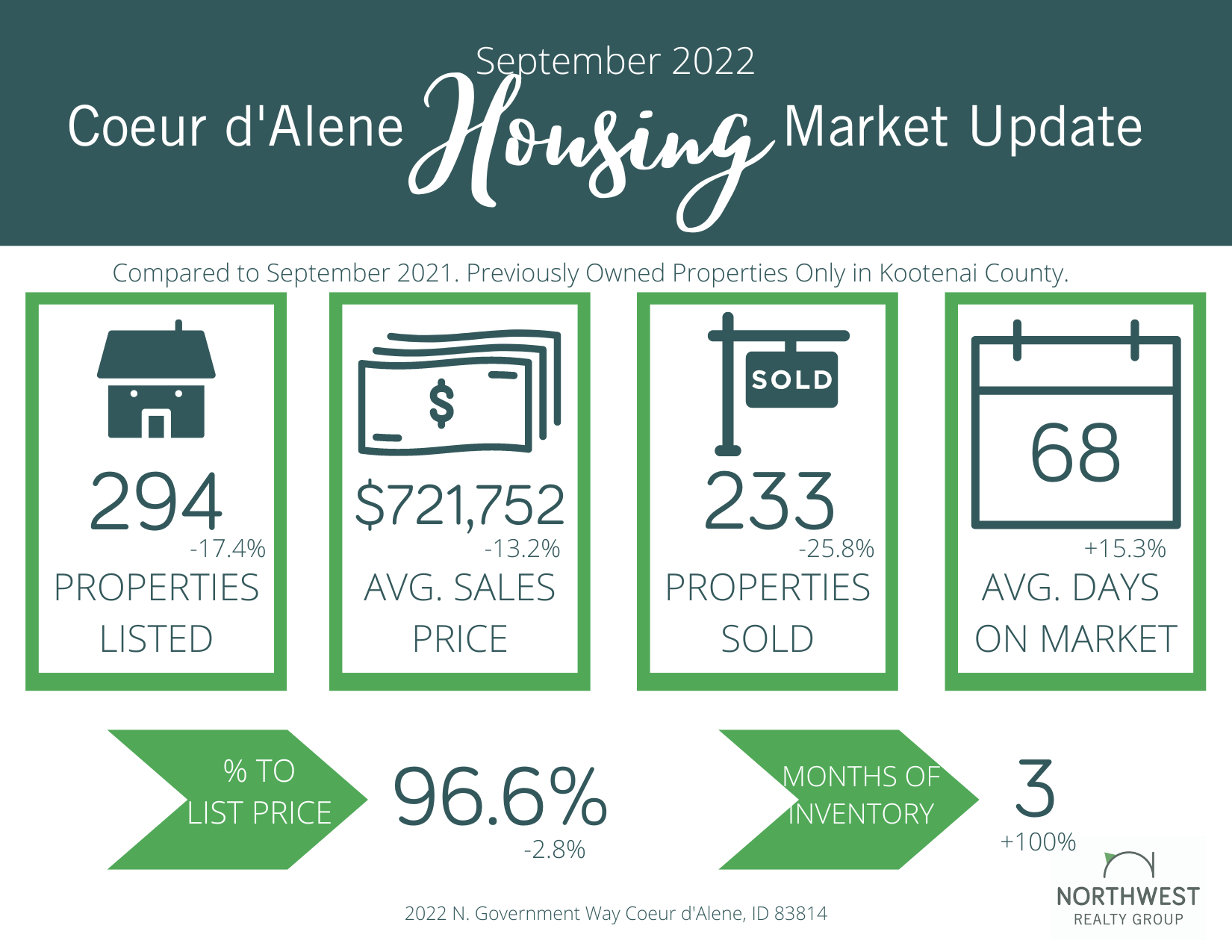
Interest rates are increasing causing the prices to come down however sellers are receiving an average of 96.6% of their list price. We are currently at 3 months supply of inventory and average days on market is 68.


Our closed sales are down 25.8% compared to this time last year. The average pre owned home sold for $721,752 which is down 13.2% from September 2021. Out of the closed sales, 104 were cash buyers and 187 were using common financing (FHA, VA or Conventional Loan).


With this market adjustment, it takes the right skills and knowledge to sell a home with competition so high and less buyers. I am that agent. I've been a full time agent since 2007 and also a real estate author. Contact me today to discuss your situation and options, 208-758-9000.


Laurel Jonas

Northwest Realty Group

208-758-9000

208HomesForSale@gmail.com

Posted in Market Updates
Sept. 27, 2022

The Perks of Owning More Than One Home

Perks of owning more than one home_Laurel Jonas Blog

Many things have changed over the past couple of years, and real estate is no exception. One impact is an increased desire to own more than one home. As trends such as remote working and flexi-hours took hold in 2021, so too did the flexibility of relocating as well as the growth of second homeownership.


This may be because the pandemic has altered how we think about our homes. Where we live has become, more than ever, our safe space and our getaway. And with the rise in remote work, more people are reconsidering where they want to live and buying second homes to give them greater flexibility. If you fall in that category, here are just a few of the perks you’ll enjoy, and how owning a second home may be a great decision for your lifestyle and your future.

Enjoy a Change in Scenery (or Weather)

When you have two homes, you can alternate between them as the weather changes or as you crave different scenery. Do you want to live in an area with a particular season? Would alternating between a resort and a suburban setting be ideal? With two homes, you have those options. Being able to move between homes based on which location best suits you at the time gives you added flexibility and variety that can help increase your happiness.


Build Your Wealth Faster

You may have heard that home equity is skyrocketing, thanks to ongoing home price appreciation. CoreLogic reports that the average homeowner gained $56,700 in equity over the last year. With home prices projected to continue rising, if you purchase a second home, you could benefit from rising equity on both properties to build your wealth (and your net worth) even faster.


Be Closer to Loved Ones

The pandemic has also reignited the importance of being near our loved ones. One option worth exploring is whether you want your second home to be near the people who matter most in your life. This makes it easier to see your loved ones but still gives you your own dedicated, private space so you can be nearby for major life events or longer visits.


Lock in Your Expenses

Buying a second home today and locking in your mortgage rate may be a good option if you’re looking to stabilize your housing costs for the long haul. If you’re approaching retirement or are looking to use your second home as your permanent residence in the future, buying that house now with today’s rate and price may be a good financial decision. That way, no matter what happens with rates and prices in years ahead, your monthly payment is locked in for the next 15-30 years.

Bottom Line

Having multiple homes has considerable benefits. If owning a second home is something you’re interested in, let’s connect to explore your options, discuss the benefits, and take the next step to start your home search.


Laurel Jonas

208-758-9000

Northwest Realty Group

208HomesForSale@gmail.com


Posted in Buying A Home Tips
Sept. 20, 2022

4 Inspiring Kitchen Upgrades Trending Now

4 inspiring kitchen upgrades trending now_Laurel Jonas Blog

For many households, the kitchen tends to be one of the most-used spaces in the home. It’s where you cook, entertain and have family dinner. And even when it’s not mealtime, the kitchen often becomes a gathering place for snacking, doing homework and spending time together.


Does your current kitchen live up to your expectations and meet your needs? If not, it’s time for a few upgrades. For inspiration, take a look at these trending renovation and remodeling projects.


Mix open shelving with functional hidden storage. Open shelving is big these days, but it’s not the best option for everyone. Mixing open shelves with hidden storage often makes more sense (especially if you have a lot of stuff to store). For the best of both worlds, consider pull-out drawers beneath your cabinets, revolving trays inside the closed-off areas, and tables with built-in storage compartments.


Opt for bold colors on cabinets. White kitchens had their moment, but bolder hues are becoming more popular now. You’ll probably start seeing more greens, purples and blues — brighter and deeper tones that really catch the eye and show off some personality.


Choose unique flooring.

While sleek stone and tile will always be in, today’s designers are also getting creative with unique flooring choices. They’re mixing up light and dark woods, opting for herringbone patterns, and using reclaimed wood to add character.


Go multipurpose.

The kitchen isn’t just for eating and cooking. For many, it’s where we work remotely, log into virtual schooling, or even get our exercise in. Finding ways to make your kitchen more functional and useful to all family members is a trend that’s sure to stick around.


Need more help deciding on value-building renovations? Considering buying a new home instead of remodeling? Get in touch today.


Laurel Jonas

208-758-9000

Northwest Realty Group

208HomesForSale@gmail.com

Posted in Buying A Home Tips
Sept. 13, 2022

What is a Seller’s Disclosure? Here’s Why It’s Important

Sellers disclosure_ Laurel Jonas Blog

What is a Seller’s Disclosure? Here’s Why It’s Important

Whether you’re about to purchase a new condo or sell your current home, there is a lot to learn and paperwork to sign. One of these critical documents is called a seller’s disclosure.  


A seller’s disclosure, also known as a property disclosure, is a document that sellers are legally required to provide buyers. This piece of paperwork will include all the undisclosed details related to the property that negatively affect its value. So before you finalize the buying or selling of a home, read on to find out why a seller’s disclosure is an essential part of any real estate transaction.

Why is a seller’s disclosure important?

A seller’s disclosure is a legal document protecting both the seller and the buyer. It protects the buyer by informing them of any issues or defects the home and surrounding property may have. It also safeguards the seller from being sued by the buyer after the transaction if the seller’s disclosure was completed correctly. 

For buyers

The goal of the seller’s disclosure is to inform the buyer of the property’s history and future repairs so buyers can make an informed decision. If the seller’s disclosure reveals a major issue with the home, buyers can back out of the deal without losing earnest money. Any problems documented in the seller’s disclosure can also give the buyer some negotiating power, such as the price of the home or requesting the seller make any necessary repairs. 

For sellers

The seller’s disclosure can only protect the seller if done accurately and honestly. If done correctly, this document will protect the seller from being held legally liable for any issues that may develop with the home in the future. This is only the case if the seller made the buyer fully aware of all home defects before the completed purchase. The seller only needs to disclose what is required by their state.

When should a seller provide the disclosure?

Typically, a seller’s disclosure is provided a few days after mutual acceptance during the closing stages of the transaction. However, some sellers may choose to disclose as early as home tours. The listing agent must be transparent with buyers about any known issues with the property, so some will do this upfront to make the process quicker. Usually, your state will have a standard form the seller fills out, while some states allow sellers to disclose more casually. Before the seller’s disclosure is signed, the buyer can still back out of the deal. However, once it’s signed, the buyer only has a few days to back out of the agreement without consequences. 


How a seller’s disclosure can impact a home sale

The seller’s disclosure can significantly impact the home selling process if a property has substantial issues. Buyers will need to decide if they’re comfortable with any significant issues disclosed and get a professional inspection to assess what it takes to handle the problem. As a buyer, it’s important to carefully review the seller’s disclosure packets with a real estate agent and during the home inspection. 


What are the standard real estate disclosures?

Each state has different requirements for seller disclosures – it’s best to check with your state’s guidelines. They can vary on a county basis, so make sure to check there as well. To help you get an idea of what to expect, here’s a list of standard disclosures: 


  • Hazards: High risk of natural disasters or threats like contamination, lead paint, radon, asbestos, and toxic mold.
  • Repairs: Any significant repairs the house may need and has had. Significant repairs would include structural, electrical, and plumbing issues.
  • Water damage: Flood risk or existing flood damage.
  • Missing items: The seller needs to list any items that will be removed after the sale, such as refrigerators or lighting fixtures.
  • Death: Sellers are not required to disclose deaths that occurred

Other possible disclosures: Other disclosures could include special historical districts, homeowners associations, and unpermitted improvements. 

Not every state requires all of these disclosures. Most required documentation is mandated at the state level, but there are a few federally mandated disclosures. Some federally mandated disclosures include lead paint, asbestos, wetlands, and floodplain disclosures. If you want to know something about the property, you can always ask the seller. Take time to understand what disclosures aren’t required to be disclosed in your state. That way, you’ll know what to ask when the time comes.

As a buyer, will I always receive a seller’s disclosure? 

There are several circumstances in which a buyer may not receive a seller’s disclosure – this is known as a “no seller’s disclosure sale.” This means the seller is selling the property without disclosing any defects or issues that the buyer might need to know to make an informed decision. We’ve outlined the basics below, but visit your state government page for further information.

Selling an as-is property

A foreclosure or deed-in-lieu of foreclosure (usually applies to a bank-owned home)


A gift or other transfer to a parent, spouse, domestic partner, or child


A transfer between spouses or between domestic partners in connection with a divorce or ending of domestic partnership


Certain business transfers in which the buyer already had partial ownership of the property (usually applies to rental properties)


Estate sales or bankruptcy sales


Sales in which the buyer waives the right to disclosure. However, the buyer can’t waive certain environmental disclosures, which refer to naturally occurring concerns like mold or flood zones. 


If a no seller’s disclosure occurs, there will be a due diligence period. During this time, the buyer will thoroughly inspect the property. If the buyer goes through the due diligence and closing process, about 14 days, without raising any concerns, then they’re deemed to have waived their rights against the seller.

What happens if the sellers fail to disclose issues adequately?

If the seller fails to disclose or actively conceals problems they’re aware of that affect the property’s value, the buyer can sue. The seller can be subject to lawsuits for recovery of damages based on fraud, deceit, misrepresentation, and breach of contract. If the law doesn’t require you to disclose something, it’s best practice to find out if it may impact the buyer. 

Even with a seller’s disclosure, don’t skip a home inspection

In addition to the seller’s disclosures, the buyer should always have an inspection done. No matter how thorough or trustworthy the seller may be, a seller’s disclosure is no substitute for a thorough home inspection by a licensed and qualified professional. Most buyers aren’t trained to look for and identify the issues that can affect the average home. Before you buy, it’s in your best interest to get an inspection. 


Final takeaways about seller disclosures


The seller’s disclosure is necessary for both sellers and buyers.


There are several disclosures, but not all will be mandatory in your state. Work with a real estate professional to understand your situation better. 


In some cases, you will not receive a seller’s disclosure. This is known as a “no seller’s disclosure sale.” 


In addition to a seller’s disclosure, it’s recommended to have a professional inspection of the property still.


Laurel Jonas

208-758-9000

Northwest Realty Group

208HomesForSale@gmail.com

Posted in Selling Tips
Sept. 9, 2022

August 2022 Coeur d'Alene Area Real Estate Market Update

August 2022 Coeur d'Alene Area Real Estate Market Update

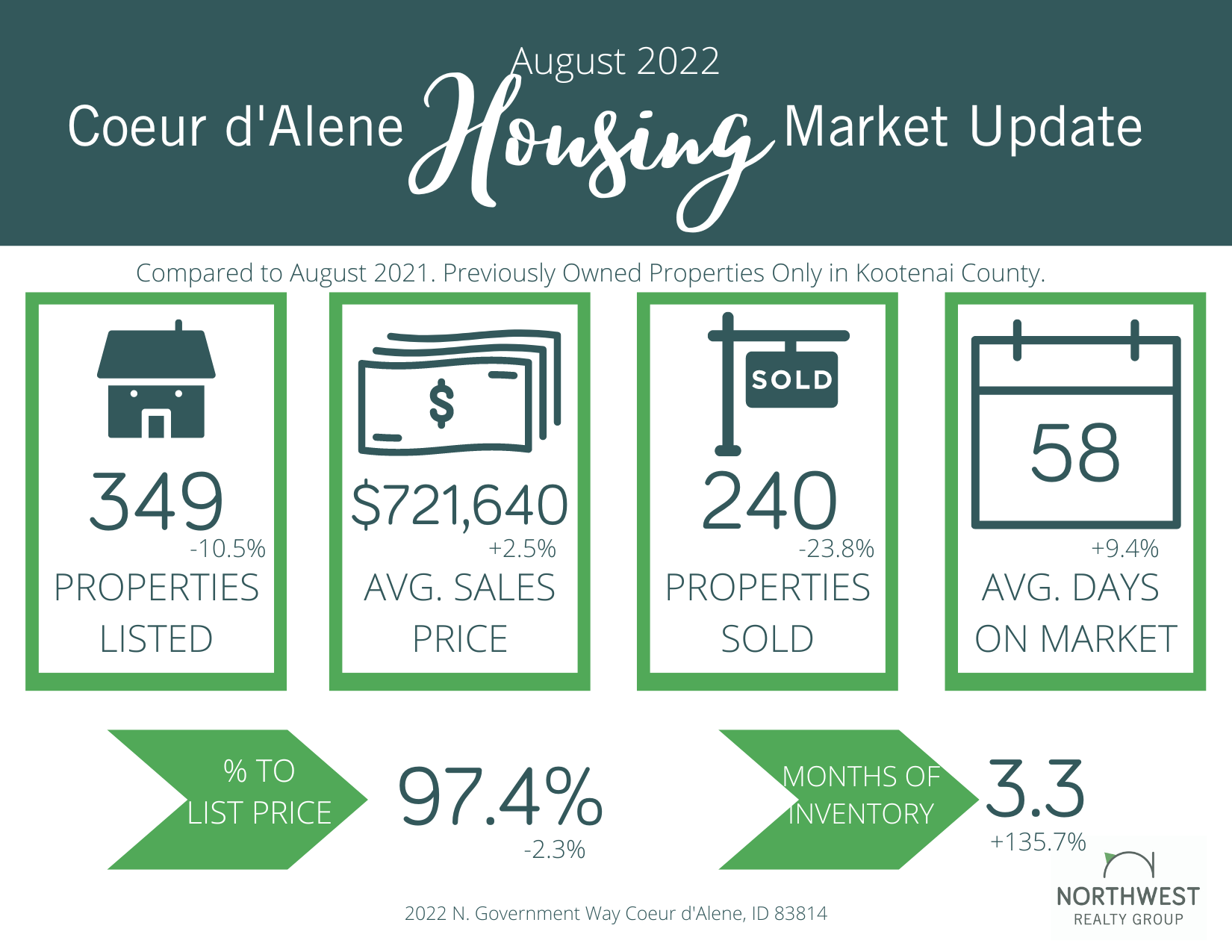
While we had 349 active homes come on the market last month, that number was down from 390 August 2021. The big difference is the amount of properties sold. We had 240 last month which is down considerably from August 2021 with 315 sold. That's 23.8% less homes sold than the previous year.


The buyer demand isn't as strong as it was last year. While the average sales prices increased slightly at 2.5%, the average days on market increased another 9.4%. Our monthly supply of inventory has increased 135.7% since this time last year.


With this market adjustment, it takes the right skills and knowledge to sell a home with competition so high. I am that agent. I've been a full time agent since 2007 and also a real estate author. Contact me today to discuss your situation and options.


Laurel Jonas

Northwest Realty Group

208-758-9000

208HomesForSale.com

Posted in Market Updates
Sept. 6, 2022

What to Know About Today's Busy Market

What to know about todays busy market

You’re probably well aware that the real estate market is more competitive than ever (due to low inventory, among other things). Still, it’s not a bad time to buy a house. Mortgage rates are low, home values are on the rise and, in many cases, buying is still more affordable than renting. Are you considering purchasing a house in today’s fast-paced market? Here are five tips that can help.


Get pre-approved.

Applying for a mortgage pre-approval is critical in a competitive market. Not only can it give you a good price range to shop in, but it can also help sellers feel more confident in your offers (and maybe even choose yours over others).


Be flexible.

If you can be flexible on your closing date or willing to waive a contingency or two, it will often work in your favor. Sellers are looking for the easiest, most lucrative sale in most cases. We can discuss what makes sense for you when the time comes. 


Make a decent earnest money deposit.

Earnest money deposits are “good faith” deposits that indicate how serious you are about a home purchase. A larger deposit may help your offer stand out.


Be prepared to bid more than the asking price.

Consider searching in a lower-than-maximum price range so that you have room to bid upward if necessary. In many cases, you’ll need to increase your bid to compete with other buyers, so maxing out your budget from the start probably isn’t the best strategy.


Be patient (but stay alert).

In the current conditions, you may not find what you’re looking for immediately. On the other hand, things could start moving quickly at any time. To find success, remember that communication and flexibility are key.


It can be challenging to buy a house in today’s market — but that doesn’t mean it’s impossible. Reach out today if you need assistance.


Laurel Jonas- REALTOR®

Northwest Realty Group

2022 N. Government Way Coeur d'Alene, ID 83814

208-758-9000

208homesforsale@gmail.com

208homesforsale.com


Posted in Buying A Home Tips
Aug. 30, 2022

5 Mortgage Myths — DEBUNKED!

5 Mortgage Myths —

DEBUNKED!5 mortgage myths-debunked


MYTH: You must have a 20% down payment to buy a house. 

TRUTH: Different loans require different down payments—some as low as 0%!


MYTH: Pre-qualified means the same thing as pre-approved. 

TRUTH: A pre-qualification is a quick assessment of how much money you can borrow based on info you provide—no documentation necessary. A pre-approval letter indicates you’ve provided financial information to a lender, and they have approved you for a designated loan amount. Serious about buying? Get pre-approved.


MYTH: You need a stellar credit score to get a mortgage.

TRUTH: For a conventional loan backed by Fannie Mae or Freddie Mac, the minimum score required is 620. The lowest credit score to buy a house with an FHA loan is 580. Mortgages are out there for folks with a wide range of credit scores. Plus, there are things you can do to improve it along the way. 


MYTH: You don’t need to shop for mortgage rates. They’re the same no matter where you go.

TRUTH: Just like any major purchase, shop around! Not all mortgage rates are the same. Closing costs and other fees can vary from one lender to another.


MYTH: It’s cheaper to rent a home than it is to own a home.

TRUTH: Owning builds equity, offers tax benefits, and gives you a predictable payment year after year. Not to mention, buying now allows you to lock in historically low rates.


Don’t be fooled by every mortgage myth you hear! Talk to folks who know the truth and can help make homeownership a reality for you. 


Laurel Jonas- REALTOR®

Northwest Realty Group

2022 N. Government Way Coeur d'Alene, ID 83814

208-758-9000

208homesforsale@gmail.com

208homesforsale.com


Posted in Buying A Home Tips