Enjoy helpful home buying and selling tips as well as market updates, community events and local love.

June 29, 2022

Where to watch 4th of July Fireworks

Where to watch 4th of July Fireworks

CDA Downtown 4th of July Parade:

Monday Jul 4, 2022

10:00 AM - 1:00 PM PDT

Located on Sherman. Free to public.

Fireworks start around 10pm


Hayden Lake Country Club fireworks:

Monday Jul 4, 2022

Located at the Hayden Lake Country Club. Free public viewing on the golf course. 

Fireworks start around 10pm


Note that Idaho state law only allows for the use of "non-aerial common fireworks."


Here's what that means from Idaho's Health and Safety code:

"Nonaerial common fireworks" means any fireworks such as ground spinners, fountains, sparklers, smoke devices or snakes designed to remain on or near the ground and not to travel outside a fifteen (15) foot diameter circle or emit sparks or other burning material which land outside a twenty (20) foot diameter circle or above a height of twenty (20) feet. Nonaerial common fireworks do not include firecrackers, jumping jacks, or similar products.

Interactive Map:


For more holiday events, check out: CDA Insider


Laurel Jonas- REALTOR®

Northwest Realty Group

2022 N. Government Way Coeur d'Alene, ID 83814

208-758-9000

208homesforsale@gmail.com

208homesforsale.com


Posted in Community
June 26, 2022

What is an Ibuyer

What is an Ibuyer_Laurel Jonas Blog

On the other hand, selling to an iBuyer can cost anywhere from 6-14% of the final sale price. However, there are several reasons for these costs. Many iBuyers will offer you an initial price for your home, then deduct fees and closing costs. Depending on the iBuyer you work with, these fees may be selling fees, convenience fees, and repair fees and can range from 5-13%. These fees can fluctuate based on housing market conditions or how many repairs are needed on your home.  When you sell your home to an iBuyer you’ll also be expected to pay closing costs just as you would in a traditional home sale as you prepare for closing, which covers title, escrow, and taxes. These costs are typically 1-2% of the final sale price.


Why sell your home to an iBuyer?


There are several reasons why you may want to quickly sell your home using a iBuyer rather than sell your home in a traditional sale. Let’s take a look at some of the common reasons why selling to an iBuyer may be a good option.


You are relocating: If you’re relocating to a new city and need to sell your current home quickly, selling to an iBuyer may be a good option. You can sell your home fast without the hassle of going through the home selling process while you’re in the middle of a move or living in another state. 


You have inherited a home: If you’ve recently inherited a home, it’s possible you don’t have the resources to maintain the home or don’t want to turn it into a rental property. If you’re planning to sell an inherited house, selling it quickly to an iBuyer might be the right option.


You have an investment or rental property: If you’re struggling to find a new tenant to occupy your investment or rental property, a quick cash transaction might be the solution you’re looking for.


You need to access your home’s equity ASAP: Depending on your financial situation, it may be necessary to access your home’s equity fast. If this sounds like you, then accepting an all-cash offer from an iBuying company might be the right choice. 


You need money for a down payment: If you’re moving, it’s possible you need to tap into your current home’s equity to make a down payment on a new home. In this scenario, selling your home to iBuyers might be the best way to make a stronger offer on your next home. 


Keep in mind that these are just a few of the reasons why selling your home to an iBuyer may be the best route to take. You should always consider your personal circumstances and seek the advice of a real estate agent or financial professional if you’re not sure.


 Are there cons of selling your home to an iBuyer?


When you’re deciding on the best way to sell your home, there can be some reasons why selling to an iBuyer may not be the right fit.


 An increase in cost: As previously mentioned, the costs of selling to an iBuyer can sometimes be more than what you’d pay in a traditional home sale. If you’ve recently updated your home or aren’t in a rush to sell, listing your home on the MLS may be a better option. 


iBuyers are not in every market: While selling to an iBuyer may be the best option for you, it’s possible that they may not operate in your area. Not all iBuying companies buy homes in every market, so it’s always important to check for iBuyers in your area before settling on the idea. 


Miss out on a potential bidding war: You lose the ability to incite a bidding war on your home if you sell your home to an iBuyer. This may be a con, especially in a seller’s market where bidding wars are more common and there are more buyers than homes for sale. If you’re not in a rush and want to sell your home for as much as possible, working with an experienced real estate agent may be a better option.


Your home may not be eligible: Depending on the iBuying company you work with; they may have different qualifications your home must meet in order to receive an offer. These eligibility requirements may be a minimum home value or depend on the current condition of your home. 


 Key takeaways about selling your home to an iBuyer


Selling your home to an iBuyer may be the right fit if you need to sell your home quickly, you require access to your home’s equity, or you just don’t have the time to prepare your home for sale. Whether you choose to sell your home to iBuyers or in a traditional sale, it’s important to weigh all the pros and cons and your own personal situation to make your home selling process a breeze.


Laurel Jonas- REALTOR®

Northwest Realty Group

2022 N. Government Way Coeur d'Alene, ID 83814

208-758-9000

208homesforsale@gmail.com

208homesforsale.com

Posted in Buying A Home Tips
June 22, 2022

Buying a House Under an LLC

Buying a House under an LLC_Laurel Jonas Blog

If you own your own business, chances are you have a limited liability company (LLC) or, at the very least, you know what that is. Business owners may choose to buy a home using an LLC or under their own name. Buying a home under an LLC is beneficial for two main reasons:


Reason No. 1:

Homeowners can maintain some privacy because the LLC is listed as the property owner. For buyers who don’t want nosy people to be able to locate their addresses in public records, buying a home under an LLC is the preferred way to acquire property. Many buyers of high-end properties prefer using an LLC, because all property transfers are recorded and available to anyone who wants to look up information on an address. An LLC prevents a buyer’s name from entering the public record.


Reason No. 2:

Owners have more protection in the event of a lawsuit. If you own your residence in your name (as most people do), someone who’s injured on your property can sue you directly. While homeowner’s insurance (and umbrella insurance if you have it) will cover the payments on a successful lawsuit up to a certain point, your other assets––including your savings, investments, and home equity––could be garnished to pay the rest of the damages. However, if you own your home in an LLC, then the lawsuit can only name the LLC, and the only assets that can be used to pay off the suit are those assets held in the LLC (which usually would just be your home.) In addition, investors commonly use an LLC to purchase properties they intend to rent to tenants because of the liability protection offered by the structure. When you own your property as an LLC you pay your property taxes through the LLC and can even funnel other costs of homeownership through the LLC.


Keep in mind that establishing an LLC will impact your property taxes and future capital gains taxes. The impact varies from state to state, but in most states you’ll need to pay an annual-report filing fee in addition to your property taxes. You’ll also need to pay legal fees to set up an LLC,  which can be expensive depending on the structure of your LLC. If you’re considering buying a home with an LLC, it’s important to consult an attorney and a tax advisor with experience in your state. You need expert advice to understand the implications of buying property under this type of ownership.

Potential cons of buying a house under an LLC

If you’re sold on the idea of buying a house under an LLC, it’s important to first examine some of the potential downfalls of this strategy. One of the biggest surrounds the difficulty of securing financing. Not to mention, you likely won’t be eligible for most types of residential loans, including FHA or conventional loans sold to Fannie Mae or Freddie Mac. Buying a home under an LLC also means you’ll forego capital gains exemptions. Typically, home sellers pay no capital gains tax on the first $250,000 of profit as a single individual or $500,000 as a married couple. But when you own a property as an LLC, you’ll ultimately be responsible for the tax bill, no matter how small or large your gain is.


Laurel Jonas- REALTOR®

Northwest Realty Group

2022 N. Government Way Coeur d'Alene, ID 83814

208-758-9000

208homesforsale@gmail.com

208homesforsale.com

Posted in Buying A Home Tips
June 21, 2022

What is a Reverse Mortgage?

What is a Reverse Mortgage?

A reverse mortgage is a loan based on the current paid-up value or equity in your home. Instead of making a monthly mortgage payment, your lender can use your equity to pay you a set monthly amount, provide a credit line for you to draw upon as needs arise, or pay out a lump sum to you. While gaining access to this money sounds great, it’s essential to understand how a reverse mortgage works to avoid any pitfalls.

How does a reverse mortgage work?

When you have a regular mortgage, you pay the lender every month so you can eventually own your home outright. With a reverse mortgage, you get a loan in which the lender pays you. Reverse mortgages use part of the equity in your home and convert it into payments to you. You do not need to pay back this loan until you move, sell the home, or pass away. When you (or your heirs) sell the home, the reverse mortgage loan balance is deducted from the proceeds of the sale. Any balance remaining from sale proceeds reverts to you or your heirs.


What can you pay for with a reverse mortgage? 

Here is a shortlist of expenses you can pay for with funds from a reverse mortgage:

  • Medical debt
  • Living expenses
  • Debt consolidation
  • Home improvements
  • College tuition
  • Another home purchase
  • Or, you can use it as supplemental income


There are no stated constraints for how you use the money. But that doesn’t mean you should run right out and get one. Be sure to read the pros and cons to understand if this financial tool makes sense for your situation.


How do I qualify for a reverse mortgage?

Prepare to shop around for the right type of reverse mortgage to suit your situation. If you meet all of these qualifications, a reverse mortgage might meet your needs: 

  • The primary loan holder must be age 62 or older – your spouse may be younger. 
  • You must own your home outright or have just one mortgage which you are the borrower. 
  • You’ll be required to pay off the existing mortgage using the proceeds from your reverse mortgage. 
  • The home must be your primary residence.
  • You must be current on all property taxes, homeowners’ insurance, and other mandatory legal obligations (like HOA dues).
  • You must attend a consumer information class led by a HUD-approved counselor.
  • Your home must be maintained and in good condition. 
  • The home must be a single-family home, condo, townhouse, manufactured home built after June 1976, or a multi-unit property with up to four units.

There are 3 reverse mortgage types

Single-purpose reverse mortgages: These are offered by some state and local government agencies and nonprofits. For a single-purpose reverse mortgage, the lender specifies how loan proceeds must be spent. For example, you may only be able to use the funds for property taxes or home repairs. This is the least expensive type of reverse mortgage, and low and moderate-income homeowners can often qualify.


Home Equity Conversion Mortgages (HECMs): HECMs are reverse mortgages backed by the Department of Housing and Urban Development (HUD). You can use proceeds from a HECM for any purpose. This type of loan will be more expensive than a single-purpose reverse mortgage or traditional home loan, including high closing costs. If you plan to stay in your home for a long time, the upfront costs are less of an issue. 


Proprietary reverse mortgages: These loans are offered by private lenders. You may be able to get a larger loan from a private lender if you own a high-value home over $500,000. These loans are more expensive than single-use loans and similar to HECMs. 


How much money can you get from a reverse mortgage?

The amount of money you can access from a reverse mortgage will vary with the amount of equity you have in your home, your age, the home’s current market value, current interest rates, and the specific type of reverse mortgage. If you have another loan, lien, or outstanding balance on your home equity line of credit, you will be required to pay the outstanding balances first with any funds you received from a reverse mortgage. The obligation includes any property tax liens, or contractor, or other private liens. 


How much does a reverse mortgage cost?

The costs and terms for a single-purpose reverse mortgage and a proprietary reverse mortgage can vary. You’ll want to shop around with different agencies and mortgage lenders to find the most favorable terms. Costs for HECM loans are well-documented since the government backs such loans. However, you will not need to pay loan costs out of pocket because the costs can be covered by loan proceeds, which will reduce the net loan amount available for expenses. 


HECM costs include: 

Mortgage Insurance Premium (MIP): This mortgage insurance guarantees that you will receive expected loan advances. You can finance the MIP as part of your loan. Initially, you will be charged 2% of the loan amount for MIP at closing. This is followed by an annual MIP equal to 0.5% of the mortgage balance over the loan’s life.

  • Third-party Charges: Third-party costs include an appraisal, title search and insurance, surveys, inspections, recording fees, mortgage taxes, credit checks, and other fees. These costs are paid at closing.
  • Origination Fee: Like any mortgage, the lender gets paid to process your loan. A lender can charge the greater of 2% of the first $200,000 of your home’s value + 1% of the amount over $200,000 or $2,500. All origination fees are capped at $6,000.
  • Servicing Fee: Service fees over the term of the loan cover services that include sending the account statements to you, paying property taxes and insurance on your behalf, and disbursing loan proceeds. If the loan has an annual adjusted interest rate or a fixed interest rate, the service fee caps $30 per month. If your interest rate adjusts monthly, the monthly service fee caps at $35. 

At loan closing, the lender deducts the first servicing fee from your available funds and then adds each monthly servicing fee to your loan balance. Alternatively, lenders may include the servicing fee in the mortgage interest rate by charging a higher rate. 


Reverse mortgage pros and cons


Pros: 

  • A reverse mortgage can give you financial options and additional income during retirement.
  • If the primary loan holder passes away, the spouse can stay in the house and continue to receive payments from the loan.  
  • You don’t have to make monthly mortgage payments.
  • Depending on the type of reverse mortgage, your funds can be used for any expense. 
  • It can be used as a way to stop or prevent foreclosure and loss of the home.


Cons: 

  • You will owe more over time due to interest on the loan.
  • You could lose your home if you don’t maintain payments for property taxes and insurance. 
  • You reduce the equity in your home because you are, in effect, lending it to yourself. 
  • The upfront cost of a reverse mortgage can be thousands of dollars. 
  • Your heirs may not be able to keep the home if they can’t afford to pay off the loan.


Is a reverse mortgage a good idea? 


While a reverse mortgage involves certain complications, it can be an excellent way to supplement your income during retirement, pay for medical expenses, or home improvements that allow you to age in place. As with any loan, it makes good sense to shop around for the best terms and fees. Guidance from a HECM counselor can help you make the best choice.


Laurel Jonas- REALTOR®

Northwest Realty Group

2022 N. Government Way Coeur d'Alene, ID 83814

208-758-9000

208homesforsale@gmail.com

208homesforsale.com

Posted in Buying A Home Tips
June 14, 2022

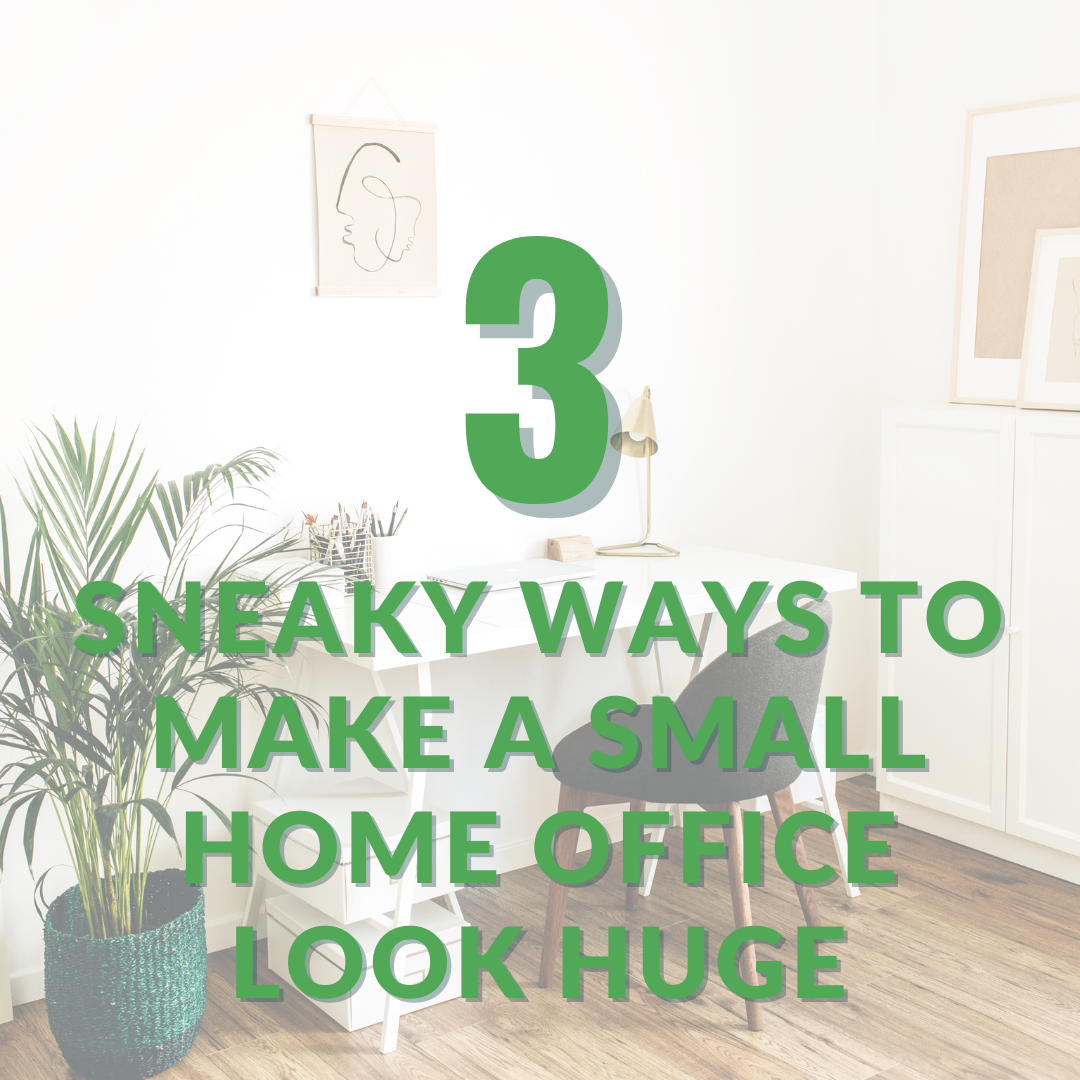
3 Sneaky Ways to Make a Small Home Office Look Huge

3 Sneaky Ways to Make a Small Home Office Look Huge_Laurel Jonas Blog

The struggle of the way-too-small home office: a space that needs to be functional often doubling as a guest room and the holding pen for all the random stuff you couldn’t find a home for elsewhere. And did we mention these rooms are often tiny? You spend many of your waking hours in this small, cramped place. So, how can you figuratively supersize one of the hardest-working and smallest rooms in your home?


1. Pick the right-sized furniture

One of the worst home office fails? Furniture that simply doesn’t fit! Just because you want a large work surface (who doesn’t?), it doesn’t mean you want to overwhelm your space with a massive CEO-style desk. Start with the right-sized desk, and orbit other furnishings around it. There isn’t a formula for size; the more compact you can go, the better. The small-home mecca otherwise known as Ikea offers countless affordable desk options. Take measurements of your room before you shop, and don’t forget to account for other furniture that needs to go in the tight space. And maybe factor in a bit of walking space, too. Find a desk that has ample storage and just enough surface space for your computer. If you primarily use a laptop, you can get away with a small laptop desk for tight spaces. For bigger devices, consider a storage-rich desk that’s both stylish and sturdy.


When it comes to your chair, you want comfort, but you don’t need the gargantuan seat on wheels that you’d see in an office building. Pro tip: Go for a stationary chair with style. Standard dining chairs work well because they’re smaller than most office chairs, but they have high backs, so you don’t have to worry about being down too low. Dining chairs are a lot more attractive than office chairs, and they just blend in better.


2. Find a place for everything

On websites, floating, open shelves look amazing. Know why? Because they’re styled for photos, not living. They probably hold about half the stuff you really need. Your pile of crumpled and mismatched paper? It’s not nearly as eye-pleasing as the perfectly stacked piles you see in design books. Here’s a good way to leverage wall space: Use it to hang file holders. You’ll find plenty of options at The Container Store or any office supply retailer. Every item should have a dedicated place that’s not your work surface or the floor.


If you can squeeze another piece of furniture in your room, Petty suggests a closed cabinet. A stylish armoire could be a nice touch. Use bins to store your office wares inside. Purchase cord organizers and tuck away that laptop when you’re offline to make everything look seamless. If you must leave things out, then do it in style.


3. Have fun with decor

One of the easiest and most cost-effective ways to make your work ambiance more Zen is through color. You can paint, but a hued wallpaper looks great, too. The key, productivity-wise: You want a design that’s inspiring but not distracting.


While overhead lighting is the best lighting for task-orientated work, a desk lamp can add a great decorative detail. Don’t opt for one that looks too utilitarian. With practically no effort, you can find options that are stylish, attractive, and affordable (the trifecta!).


One thing to skip: rugs. Chairs are harder to move on rugs and placing them under a desk ends up cutting the rug off awkwardly.


Laurel Jonas- REALTOR®

Northwest Realty Group

2022 N. Government Way Coeur d'Alene, ID 83814

208-758-9000

208homesforsale@gmail.com

208homesforsale.com
 

Posted in Home Tips
June 14, 2022

6 Potentially False Home-Selling Hopes and Dreams

6 Potentially false home selling hopes and dreams_Laurel Jonas Blog

Home sellers are in a great mood these days. And who can blame them? In this seller’s market where homes go fast and for top dollar, many sellers are excited to cash in and make a killing. In many cases, they’ll succeed—yet this wild exuberance can also go overboard. Such bullish optimism could result in an uncomfortable collision with reality.


1. You will sell in 3 days

Markets across the United States are facing a shortage of homes available for sale. As a result, it’s not uncommon for homes to sell after a few days or weeks on the market. However, a number of factors must come into play. Real estate agents typically see this scenario only when a home is in a great location, is in turnkey condition, and is listed at an area’s median price point. (The national median is about $380,000.) Houses that require extensive renovation, are listed in a higher price range (read: less competition), or have quirky features may linger on the market.


2. You can price your home sky-high

Your home may be your pride and joy, but beauty is in the eye of the beholder. Many sellers tempted by the strong seller’s market may ignore their real estate agent’s advice, and insist upon an unrealistic number just to see if the market will bear it. One of the biggest mistakes sellers can make is going with aspirational pricing just because it is a seller’s market. Many deals get multiple offers and go at or over ask, but they almost always stem from buyers sensing some form of value. And if there is no perceived value, buyers will often stay on the sidelines, even with limited inventory.


3. You don’t need to make repairs or upgrades

Plenty of investors are willing to snap up fixer-uppers these days, but the average Joe Buyer is not in the mood to renovate. If the seller has a place that needs touch-up or decorative work, it’s usually a good idea to do it ahead of listing. Construction and renovation costs are up sharply with all the supply chain issues. Buyers can be wary of purchasing a place that they will have to do work on, especially since the money spent there needs to be fully out of pocket versus buying a move-in-ready product and having everything rolled into the mortgage. You certainly might avoid major renovations before putting your home on the market, but simple updates such as painting the interior walls and switching out the hardware on your cabinets and drawers can go a long way in landing you a buyer fast.


4. You can sell your home as is

During the past few years, “as is” has emerged as a term sellers use to indicate that any and all major and minor repairs found during a home inspection will not be addressed and/or negotiated under any circumstances. Here’s the problem with this cavalier attitude: In this hypercompetitive market, buyers are painfully aware that they can’t be picky, but that doesn’t mean they have zero standards. And let’s be honest: No matter the competition, many buyers still desire a turnkey home that won’t require a ton of work to fix up. The term “as is” can also be a red flag to buyers, as it suggests the house may have underlying issues. If there are known issues, such as a structural problem or a boiler that needs to be replaced, it’s better to disclose them upfront so all parties are aware. The fear of the unknown could keep buyers from making an offer. Additionally, when it comes to real estate, everything is negotiable. If a home lingers on the market or fails to ignite a bidding war, a seller might want to reconsider that “as is” condition of sale.


5. You don’t need a real estate agent

Perhaps you might have experience flipping some homes, or your law degree gives you the assurance to handle such a major transaction on your own. Why not post your home on real estate sites, sell it yourself, and avoid paying a commission, you might be wondering. The reality is way more difficult than what you’re imagining. You’ll need to produce high-quality photos of your home (smartphone pics aren’t going to make the grade); respond to inquiries; and schedule showings. And even after all that effort, you won’t have access to list your home on the professional multiple listing service— which means thousands of buyer’s agents won’t be sharing it with their clients. You’ll most likely end up leaving money on the table. It actually pays to work with an expert when it comes to marketing and pricing your home.


6. Post-sale, you can easily buy something else

Yes, you’ve sold your house, but where will you go? After they make a sweet profit on the sale of their home, many sellers assume they can easily buy a new home with the windfall. But not so fast. If your post-sale plans involve buying a new house, whether you’re upsizing or downsizing, you’ll find yourself in the same pool of buyers competing for homes. A real estate agent can help you through the process of selling your old home and buying a new one, so you won’t be left in a lurch.


Laurel Jonas- REALTOR®

Northwest Realty Group

2022 N. Government Way Coeur d'Alene, ID 83814

208-758-9000

208homesforsale@gmail.com

208homesforsale.com

Posted in Selling Tips
June 9, 2022

May 2022 Coeur d'Alene Area Real Estate Market Update

May 2022 CDA Area Real Estate Market Update

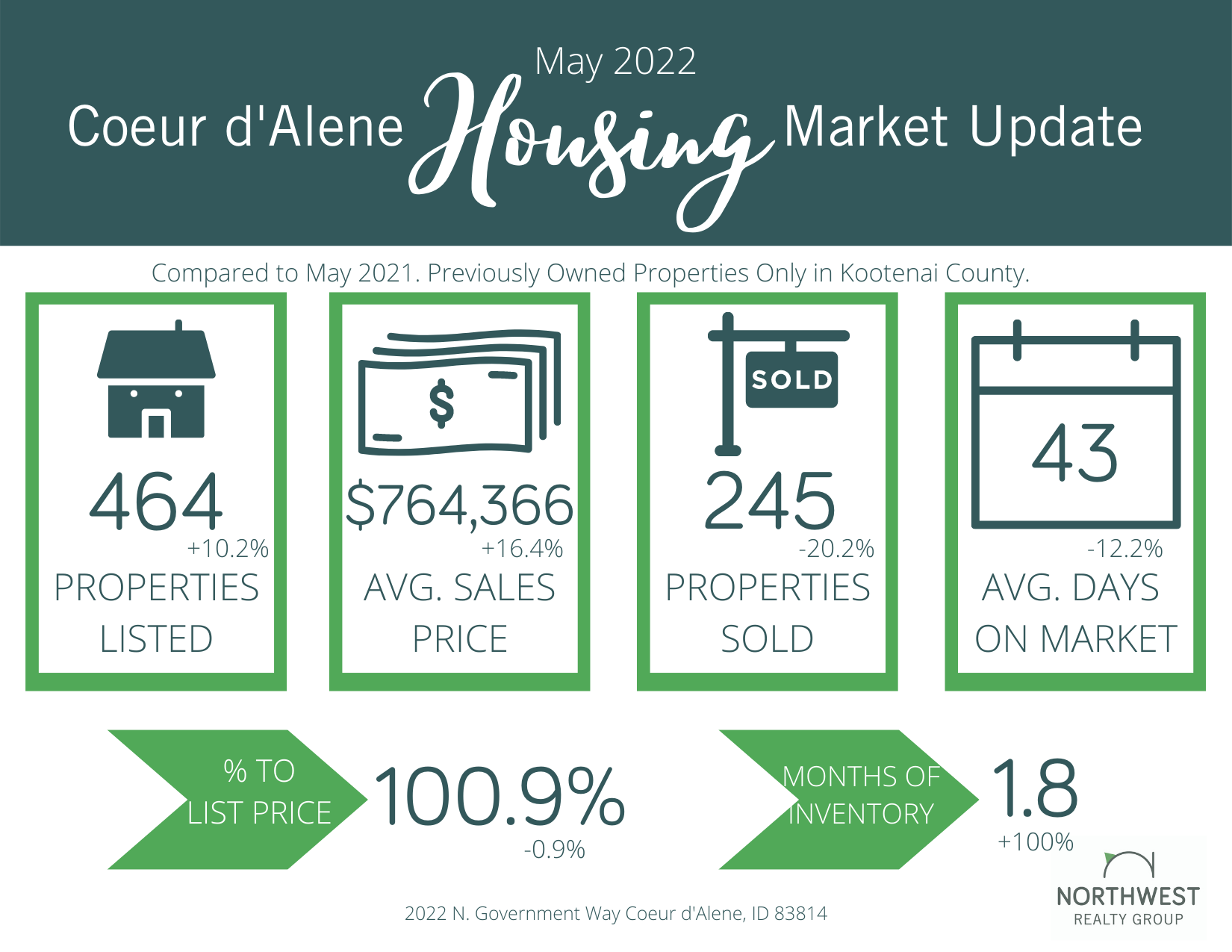
464 Homes were listed May 2022

245 Homes Sold last month

Average Sales Price $764,366

Average Days on Market: 43

Last Month We Had 1.8 Months of Inventory. This is up 100% compared to May 2021.

Sellers Are Receiving An Average of 100.9% Of Their List Price.

* These stats are based on previously owned properties in Kootenai County


We are currently still considered a seller's market but we are seeing some shifts in the market. More and more homes are coming on the market meaning sellers have more competition and will need to be priced accordingly to successfully sell. With word of further interest rate hikes coming, if you're thinking of selling your home now is your chance while the market is still favoring sellers. 


Laurel Jonas- REALTOR®

Northwest Realty Group

2022 N. Government Way Coeur d'Alene, ID 83814

208-758-9000

208homesforsale@gmail.com

208homesforsale.com
Posted in Market Updates
June 7, 2022

Can a Buyer Inspect a Home Without a Seller’s Permission?

Can a buyer inspect a home without a sellers permission_Laurel Jonas Blog

Here’s the scenario: Your house is on the market, and you have interested buyers, but they are concerned about the roof. Maybe your home has a bit of damage from the last storm, but it’s nothing major. Still, a potential buyer sends a roofer to check things out without your approval. Sending a professional to somehow inspect the condition of your home unannounced may seem a bit bold on the buyer’s part. Can a potential buyer send someone—be it a roofer, inspector, or contractor—to inspect a home or snoop around outside without the seller’s consent? Here’s what the experts have to say about this sticky situation.


Your rights as a homeowner

Whether or not you’re selling your home, you have certain rights as a property owner. These laws may vary by state, but generally, anyone coming onto your property without your permission could be considered a trespasser, in accordance with your local statutes. If a potential buyer (or an inspector hired by the buyer) wants to stop by and take a peek at your roof or anything else, a written approval from the seller is required. Inspecting the house for purchase, formal inspections, and the steps for a resolution to those inspections should always be in writing. And all parties should have committed to and agreed to the inspections and their resolutions. The formality of inspections varies by state, but sellers have the right to approve or deny any inspection requests and resolutions to inspections.


Professionals should know not to trespass

Paul Ryll, a residential appraiser and co-founder of Oscar Mike Mobile Appraisals, won’t go anywhere near a property without permission. “By law, I am not allowed on the subject’s property without the owner of record’s permission, regardless of the type of appraisal assignment or who my client may be,” says Ryll. Appraisers and inspectors are responsible for confirming they have permission to be at a house—whether inside or out—with the homeowner.


What if you’re using a dual agent?

A dual agent is an agent that represents both the seller and the buyer in the same real estate transaction. In such a transaction, there may be concern about the dual agent representing both sides fairly. Could the dual agent send the buyer or an inspector to the house without the seller’s approval? The answer is no. A dual agent must follow the rules that govern home inspections. Having a dual agent has no bearing in this case as we all have to abide by the law. It’s always unlawful to enter a property without the property owner’s permission. If an inspector shows up on your doorstep with your agent—and you didn’t give the agent permission—it’s time to revisit your dual agency agreement. If you feel as though you are not receiving fiduciary care from your agent, you can always seek out help from your agent’s broker or the local real estate commission.


What about an inspection during a showing?

The low housing inventory, competitive seller’s market, and limited showings due to COVID-19 restrictions have prompted some buyers to forgo inspections to gain a competitive edge. But waiving an inspection could have costly implications for the buyer. Concerned Realtors and inspectors started working toward solutions that made sense for both sides of the transaction. One of those solutions was pre-offer inspections. Agents and inspectors often schedule 30-minute inspections within the time frame of a house showing. This offers insight on those big-ticket items for a buyer prior to writing an offer. Often, the inspector will credit the cost of that 30-minute inspection toward a full inspection after an offer is accepted. Still, an inspector can’t come to the showing with a buyer and nose around without permission. It’s a matter of coordinating between buyer and seller, but it does happen more often than you’d think. The buyer’s agent has to request a showing but note that it is for an inspection in the request.


Laurel Jonas- REALTOR®

Northwest Realty Group

2022 N. Government Way Coeur d'Alene, ID 83814

208-758-9000

208homesforsale@gmail.com

208homesforsale.com

Posted in Buying A Home Tips
June 6, 2022

How to spot a walkable neighborhood

How to spot a walkable neighborhood_Laurel Jonas Blog

Strolling to a cafe for breakfast, walking around the corner to yoga—isn’t that the life? Before you buy or rent, here’s how to suss out whether a neighborhood you’re interested in will let you get out from behind the wheel.


See what locals have to say.


  • When it comes to picking a neighborhood, do a search for “What Locals Say.” It is a good way to find stats that show what percentage of locals say the following about their neighborhood:
  • It’s walkable to restaurants
  • It’s walkable to grocery stores
  • There are sidewalks
  • People would walk alone at night
  • Streets are well-lit
  • Car is needed


So, for example, in Boston’s very walkable Beacon Hill neighborhood, 93% of residents say there are sidewalks, 92% say it’s walkable to restaurants, and only 18% say a car is needed.


Scope out the commute.


A truly walkable neighborhood is one where you can get in and out of the neighborhood without a car. Studies show that the closer you live to transit networks (bus, train, bike share), the more likely you are to walk. Map the route to your workplace in public transit mode. How long is the walk to the bus or train? How long is the ride?


You can also get useful commute intel from locals with another quick search. Millions of locals have been asked what their commute is like, so you’ll find quotes like this one from a resident of New York City’s Financial District: “Close to every train you could want to get anywhere in the city. My commute is super easy—10 minutes to SoHo by train [or a] 20-minute walk.”


Check out local dining spots


To find out whether you can easily step out for a bite to eat, take a peek at Yelp or Google or whatever Maps you prefer for the home listing. That’ll give you a sense of how many restaurants are within walking distance. And keep in mind, the more restaurants there are nearby, the more your neighbors will likely be out and about, too.


Take a virtual walk


Before you hoof it over to a potential new neighborhood, use Google Street View to explore it virtually. On any home’s page, you’ll find a gallery of maps right below the house photos on most home search sites. One of these links to the Google Street View at the home’s front door. Take a spin through the neighborhood. This will give you a good idea of what getting around could look like and what’s nearby. Just remember there’s no telling what time of day (or year) the images were captured. A sleepy-looking street could be exactly that: a street at 6 a.m. on a wintry Saturday.


Drop by at different times of day


All that online research is perfect for narrowing your neighborhood list down, but nothing replaces a real-life visit. In fact, we suggest a few. Check out the area on evenings and weekends, and also in the middle of a weekday. See whether the cafes and shops you’d walk to are open and active during the times you’d use them, and whether the routes you’d take are pleasant and accessible at those times, too.


Be on the lookout for:


  • Wide, accessible sidewalks: Walkability isn’t just about distance. Wide sidewalks are key to feeling safe walking around.
  • Shade: Trees near the sidewalks encourage locals to choose walking over driving.
  • Street furniture: Places to sit and rest tells you that the city has thought about walkability and has made investments to encourage it. Benches, picnic tables, and other places to catch your breath are a good sign.
  • Crosswalks and pedestrian signals: Most intersections have these, but how pedestrian-friendly are they? Look for signals with buttons for walkers to push and wide, well-marked crosswalks.
  • Street lights: Safety first—people won’t walk where they can’t see or be seen.


Do a “near me” search


When you’re in the neighborhood, search Google Maps for “restaurants near me” or “coffee near me.” Check out a few of the places. Are the walks reasonable? Do the routes have pedestrian-friendly infrastructure? Take some exploratory walks to the places you’d be likely to visit. Ask yourself: Do I enjoy walking around here? If it feels right to you, it just might be the right place to call home.


Laurel Jonas- REALTOR®

Northwest Realty Group

2022 N. Government Way Coeur d'Alene, ID 83814

208-758-9000

208homesforsale@gmail.com

208homesforsale.com

 

Posted in Buying A Home Tips
June 6, 2022

How to get over losing out on a home

How to get over losing out on a home_Laurel Jonas Blog

You had such big dreams for the two of you. You were ready to make the big commitment. You thought you’d grow old together. But then your offer on the house didn’t go through. You lost out. You won’t be buying that perfect-for-you place. You won’t be cooking in the all-white modern farmhouse-style kitchen or planting roses in the lushly sodded and fenced yard. You’re no better off than when you started, in the same digs you wanted to leave last year. When you lose out on a house you wanted, the heartbreak is real. It’s the real estate version of being ghosted right when you started scouting honeymoon spots. Here is how to deal with heartache—and all of its many symptoms—when the house that was supposed to be “it” turns out to be just another listing.


Symptom: Your head (and friends) know it was “just” a house, but your heart huuuuuurts.


Solution: Go and feel all your feels.


Don’t hold that nasty stuff in. Don’t pretend it’s no big deal. Let yourself feel everything—the disappointment, frustration, and the empty feeling of wondering what might have been. Cry it out. Scream it out. Find a punching bag and take it out. You’re mourning a lost dream. It’s legit. It’s OK to lie in a fetal position and tearfully binge watch House Hunters. Or The Hulk. You do you.


Symptom: Can’t. Stop. Refreshing. Listing.


Solution: Take some me time.


Do the one thing you wanted to do in your relationship, but didn’t. When you were house hunting, did you save every spare dollar for your down payment? And never leave town in case you missed a great listing or the chance to make an offer? It’s time for a getaway. Treat yourself. You will get a house that’s perfect for you at some point, but you need to get out of your head for a minute. Remember: when one door closes, another opens—and it’ll stay propped until you’re back from your weekend away with a few mojitos.


Symptom: You accidentally keep driving by.


Solution: Stay away from reminders.


Don’t drive by the house to see if it’s marked pending or if a moving van is in the driveway. Don’t even drive by the neighborhood or that awesome little coffee shop that was just down the street where you had already imagined yourself lounging on weekends with an espresso con panna. And take it out of your Favorites on Trulia so you don’t see it every time you log on. You don’t want to obsess over what might have been.


Symptom: You realize life before the house dream…kind of sucked.


Solution: Restock your life with people


Let’s be real for a minute and recognize that it was just one house (too soon?). Sometimes we attach ourselves to any dream that feels like a needed change. So change your world in another way. Call your friends. Reconnect with old ones. Meet (gasp!) new people. Step outside of your comfort zone and try meeting a new friend at the gym or a painting class. 


Symptom: Real talk? You regret ever seeing that damn place.


Solution: Learn from the heartache.


Anger’s fine. Totally normal. Try to see an ended relationship as a lesson, not a failure. What worked and what didn’t with that home buying process? What might help you have a better shot at success next time? Be honest. Did you go too low? Can you live with two bedrooms instead of three? Can you really afford that hot neighborhood, or are you trying to punch above your weight? It could be time to look for different traits in a house so the two of you will succeed as a couple.

Symptom: You think it’s time to get back in the house hunting game. But you also can’t even.


Solution: Get back out there.


When you’re ready, know that it’s okay to test the waters again. When you really start looking at just how many homes are for sale, you might start wondering how you got so fixated on just one anyway. Whether it’s setting up a search on a home search site or with your trusted agent for houses in that perfect neighborhood, or dropping by an open house you spotted online, get back in the game. Not every listing has to be perfect for you to check it out. Just look. Keep dreaming about the place you want, and “the one” will eventually open the door. 


Laurel Jonas- REALTOR®

Northwest Realty Group

2022 N. Government Way Coeur d'Alene, ID 83814

208-758-9000

208homesforsale@gmail.com

208homesforsale.com

Posted in Buying A Home Tips