Enjoy helpful home buying and selling tips as well as market updates, community events and local love.

May 31, 2022

Is Buying a Historic Home Right for You?

Is Buying a Historic Home Right for You?

Only you can answer this question. If you are looking to purchase a Historic Home, there are some things to consider before making that decision.

Is buying a historic home right for you_Laurel Jonas Blog

Consider these factors before making history your home. Some home buyers want new, modern and move-in ready. Others prefer older homes, with character and charm they can’t find in new construction. If you’re interested in historic homes, take these factors into consideration as you shop.


Historic neighborhoods often impose restrictions

Many towns throughout the U.S. have zoning and planning commissions that, among other things, set out to preserve and protect historic homes and neighborhoods. As a result, renovating and altering a historic home — particularly the building’s facade — will require a separate layer of approval and sometimes bureaucracy. If you buy a 100-year-old home, you may not be able to renovate it the way you want, and that is a serious consideration.


Some landmark or historic districts retain an immense amount of control. As a result, renovations and planning can take longer and cost more. If you’re purchasing a historic home with intentions to renovate, you should consult both an architect and town officials.


Recreating architecture from the past can be challenging and expensive.

Consider the example of Victorian-era homes. Contractors and home builders constructed Victorian homes through the mid to late 19th century, often with materials that are no longer in use today. If you buy a home in less-than-perfect condition, finding the wainscoting, picture rails, crown moldings, and richly decorative and ornate features common in Victorian architecture can be tricky. Architectural salvage companies can track down these materials, but there’s often a steep cost attached.


Repair and maintenance needs could be extensive

Most buyers want move-in ready homes because they don’t have the time, money or energy to embark on a renovation project. These buyers also don’t want to be burdened with systems going out or having to live with older or outdated technology. For them, it’s a quality of life issue.


If you want a historic home, you need to have a maintenance strategy in mind. Unless you plan to do major renovations or updates (subject to any landmark or historic area regulations), you have to be ready to address issues that arise. Broken systems, leaks or flaws mean time and money.


For history buffs, no amount of time commitment or money will stand between them and a one-of-a-kind home. That person appreciates the architecture and knows that intensive maintenance is par for the course. If you don’t share that appreciation, a historic home is not right for you.


Laurel Jonas- REALTOR®

Northwest Realty Group

2022 N. Government Way Coeur d'Alene, ID 83814

208-758-9000

208homesforsale@gmail.com

208homesforsale.com

Posted in Buying A Home Tips
May 25, 2022

Should you go to an open house even if you’re not ready to buy?

Should you go to an open house if you are not ready to buy_Laurel Jonas Blog

With all of the listing sites available, browsing homes online can become addictive. Even if you’re not in the market to buy or sell a home, you may find yourself scanning the internet for homes that you do not intend to buy or are completely out of your price range. Not only does this help past the time, but it’s also an exhilarating pastime. But, instead of just simply perusing the web for a home, why not visit them? If you think you need a realtor to go to an open house or you have to be in the market to buy a home to attend, think again. Attending an open house can be a beneficial endeavor for your future home buying experience. So before you discount the idea, here are a few things to consider.


Is it okay to attend an open house without a realtor?

You might be wondering, “Do I need a realtor to go to an open house?” The first thing that may deter you from going to an open house is that you think you need to go with an agent. While many buyer’s agents recommend booking with them ahead of time to visit a home, realtors are used to prospective buyers stopping by open houses all the time. An open house allows prospective buyers to see what’s available without any pressure to buy. So, if you’re not ready to partner with an agent, it’s completely okay to attend open houses alone.

Discover what you can afford

The homes you’re attracted to and what homes you can afford might be two completely different things. Often, first-time homebuyers don’t get a good idea of what they can afford until they are deep into the home-buying process. They might be searching for something that doesn’t even exist. Therefore, the sooner you can understand what type of homes are available within your price range, the better chance you have of successfully finding a home that matches your expectations and budget.


Visiting open houses can help you discover what you can and cannot afford. While you can type in a price range online, the photos and experience of visiting the home might be quite different from the listing. Getting up close and personal with homes that may interest you will give you a better idea of what to expect when you start the home-buying process. This way, you won’t be disappointed and discouraged when you start looking for your perfect home.


Check out the competition

The number of guests attending an open house can indicate how fast you need to make an offer when you find a home you’re interested in. It can also tell you how you need to price your home to have it sell quickly. While some housing markets can allow a few days to make a decision, others may only give you a few hours to submit your offer. If you pay close attention to the other buyers at the open house, you may gather some intel about what type of home buyer the seller is looking for. Even though this may not matter now since you don’t intend to purchase the home, it may help you later when you’re ready to submit an offer. The more information you can gather, the better you’ll be able to navigate your home-buying process.

See realtors in action

Even if you don’t identify the home of your dreams, you might be able to connect with a realtor who can help you find your dream home. Visiting open houses gives you the perfect opportunity to interview candidates, without them even knowing you are looking for an agent. This gives you the ability to see how different realtors represent their clients and if they might be suitable for your needs. Be aware of how the realtor interacts with you upon your arrival. Do they greet you, or are they too busy to give you the time of day? You should also come with insightful questions about the market to determine how knowledge the agent is.


Observe home design trends

Generally, sellers try to make a great first impression when hosting an open house. Some sellers may even make some updates or hire a staging company before they list their home. Sellers tend to rely on the guidance of their realtor or the design trends happening within the market. Therefore, when you attend an open house, you can get an idea of what home designs you’ll see. It will give you an idea of what you’re attracted to and things you may look for when buying a home. Also, it may give you some inspiration for updates to your current home that will make it feel like new.

Get familiar with neighborhoods that interest you

Buying a home is about more than the property itself. It’s important to find a home and community that suits your lifestyle. For example, if you want to start a family, you may want to buy a home in a good school district with parks close by. Therefore, this is the perfect time to start learning about nearby communities that could be a match for your needs. You can begin by observing the residents and vibe of the communities you’re interested in a few months before you start the home buying process.

Learn more about your needs

Often, it’s challenging to know what you truly want in a property before you start searching for a home. For instance, how many bedrooms do you want? Are you okay with a first-floor master? What amenities are you looking for? Viewing other homes will give you an idea of different layouts and amenities that interest you.


The bottom line

Sure, you may feel nosey or that you’re intruding. However, regardless of whether you’re buying or selling a home, you should visit a few open houses. You don’t need to bring a realtor. Just hop in your car or take a walk down the street to get a better idea of what you can afford and what homes make sense for your lifestyle.


Laurel Jonas- REALTOR®

Northwest Realty Group

2022 N. Government Way Coeur d'Alene, ID 83814

208-758-9000

208homesforsale@gmail.com

208homesforsale.com

Posted in Buying A Home Tips
May 24, 2022

9 House Cleaning Hacks (for People Who Hate Cleaning Their House)

9 House Cleaning hacks for people who hate cleaning_Laurel Jonas Blog

Everyone hates getting bogged down with life’s little details. And guess what? You don’t have to! Here are house cleaning hacks for people who hate cleaning their house. Let’s face it, this is everyone.


1. Use old socks to clean blinds

Blinds often have multiple sides and shapes, so they can sometimes be a hassle to clean. But with this simple hack, they don’t have to be. Simply use a mixture of equal parts vinegar and water to dampen an old sock, and then swipe the damp sock over each section of the blinds. Embedded dust and dirt will come right off!


2. Dust electronics with coffee filters

Coffee filters are perfect for cleaning dust from TV screens, computer monitors, and any other screens around the home, without leaving behind any fibers like towels do. You can also clean windows without leaving streaks—just clean them with a coffee filter instead of paper towels.


3. Clean your ceiling fan with a pillowcase

Instead of using a rag to clean your ceiling fan, which usually results in dust falling onto your furniture and floors, use an old pillowcase. Slip the fan blades inside the pillowcase, and then wipe each blade one at a time. Then just throw the dirty pillowcase into the washing machine.


4. Use dryer sheets to clean everything

Apparently, dryer sheets have many uses beyond the laundry room. Run a dryer sheet along your baseboards to remove dirt and repel dust. Clean lampshades with dryer sheets as they pull away dust and prevent static cling, which equals less dust in the future. And add a dryer sheet to the bottom of your trash can to absorb odors and leaks. Dryer sheets, either used or unused, are also the easiest way to break down soap scum. Simply scrub fixtures with a sheet and see results immediately.


5. Steam clean your microwave

Everyone hates cleaning the microwave. Instead of scrubbing it down, try putting a bowl with lemon juice and water in the appliance. Microwave on high power for three minutes and allow it to sit for five more minutes. The steam will loosen any food remnants and banish odors, too.  A couple of easy wipes inside and you’ll have a clean microwave with a lemony scent.


6. Grab pet hair with rubber gloves

When your standard vacuum can’t suck up all your pet’s hair, rubber gloves will get the job done. Just slide them on and rub down any areas that need extra cleaning. When rubbed against fabric, the glove generates static electricity, which causes pet hair and lint to stick to it. Rinse the gloves under running water when you’re done, and the hair will come off.


7. Clean with vinegar (and save big)

Distilled white vinegar is one of the most popular, eco-friendly, and versatile cleaning staples around due to its acidity. Plus, it’s cheap so you will save tons of money on cleaning supplies.


It can be used in the following ways:

Shower: Wipe your shower doors with vinegar to prevent soap scum and buildup.


Kitchen and bathroom drains: To help keep drains clog-free, pour a cup of distilled white vinegar down every two weeks. Allow it to sit for a half-hour, and then run cold water to flush it out.


Tile surfaces: Mix a half-cup of distilled white vinegar and a half-gallon of warm water. Use it to clean all tile surfaces.


8. Polish bathroom fixtures with baby oil

Do you have dull bathtub, shower, and sink fixtures? No problem. Get a paper towel and some baby oil. Put a dab of the liquid on the towel, then wipe it on the faucet. You’ll see it shine!


9. Let your dishwasher do double duty

If you only use your dishwasher to clean dishes, you aren’t using it to its full potential. Take a look at this list of things you can safely wash in the dishwasher, and put it to work:


  • Rubber flip-flops and baseball caps
  •  
  • Makeup brushes
  •  
  • Nonelectrical plastic and rubber kids’ toys
  •  
  • Mouthguards
  •  
  • Hairbrushes and combs
  •  
  • Plastic and metal garden tools
  •  
  • Refrigerator shelves

Laurel Jonas- REALTOR®


Northwest Realty Group

2022 N. Government Way Coeur d'Alene, ID 83814

208-758-9000

208homesforsale@gmail.com

208homesforsale.com
 

Posted in Home Tips
May 18, 2022

Keep Your Home Address Private

Keep Your Home Address Private_Laurel Jonas Blog

There is a myriad of reasons buyers don’t want their names associated with their home address. Certainly, celebrities or professional athletes aren’t eager to give up their home info, nor are public officials, police officers, or survivors of domestic abuse. In fact, the same applies to any homeowner who finds it unnerving that anyone with Google access can find their home address.


Whether it’s a matter of privacy or personal safety and security, keeping exactly where you live away from prying eyes is possible. And hiding a real estate purchase is available to everyone regardless of socioeconomic status. Do you not want your name to pop up when someone searches real estate records? Here’s how to hide your home purchase.


Ask around in your network

It’s likely someone in your personal or professional circle has faced privacy issues when buying a home. So ask your various contacts for recommendations for real estate professionals. Then ask those agents about their experience in keeping purchases private. Buyers who are looking for confidentiality should work with agents that show that they are taking steps to safeguard their clients and clients’ information from the very beginning. Agents have fiduciary obligations that require them to ensure, among other things, confidentiality, obedience, care, and loyalty to the client. That’s just the legal and ethical side of it. And if they are speaking about other clients freely to you in detail, they are likely doing the same about you. You should not trust that agent. So chat with real estate professionals in your area, and discuss your privacy concerns. Be sure you feel comfortable and confident in their ability to guide you through the buying process. Having the wrong person can skew your entire purchase.


Erase your home’s internet history

Most multiple listing services require homes to be pulled off online sites within 24 hours of a closing. So confirm with the listing agent of the home you want to buy that this duty will indeed be performed in a timely manner. Removing the listing will purge the home’s information from online systems. Then there would be only one way someone could find out whether you own a property. They would have to visit your local town hall and look up real estate transactions.


Hide a real estate purchase using a trust

People form trusts as part of estate planning. Trusts specify how assets—such as a house, money, or heirlooms—are distributed to loved ones after death without the hassle and costs of probate court. Yet trusts can also be used to hide real estate purchases. Your trust will own the home and be listed in the public records as the owner. If you have children, you should have a trust anyway. You can call the trust anything you want. Most people use their last name. But you don’t have to, so people can’t associate the trust’s property with your real name.


Hide a real estate purchase with an LLC

Another way to maintain your privacy and keep your address out of sight is by forming a limited liability company, or LLC. The IRS states an LLC is for a business structure. But you don’t have to own a business to form an LLC to hide your real estate purchase. Regulations vary by state, yet most states don’t restrict LLC ownership. This means an LLC can be designated to a single individual, several members, corporations, other LLCs, or even foreign entities. You can learn more about setting up an LLC through your state’s business formation website. Like a trust, your LLC will be listed as the owner of your property, which means you can keep your name off the official records—and keep your privacy intact.


Contact an attorney

In most states, you can set up a single-member LLC. But consider that you might miss a few important details forming a company on your own. You should speak with an attorney about how to set up a trust or an LLC correctly. Arm yourself with the necessary information, and money, and you can possibly bid yourself into a premium asset.


Laurel Jonas- REALTOR®

Northwest Realty Group

2022 N. Government Way Coeur d'Alene, ID 83814

208-758-9000

208homesforsale@gmail.com

208homesforsale.com

Posted in Buying A Home Tips
May 17, 2022

What Everyone Wants To Know: Will Home Prices Decline in 2022?

will homes prices decline in 2022_Laurel Jonas Blog

If you’re thinking of buying a home in today’s housing market, you may be wondering how strong your investment will be. You might be asking yourself: if I buy a home now, will it lose value? Or will it continue to appreciate going forward? The good news is, according to the experts, home prices are not projected to decline. 

Here’s why

With buyers still outweighing sellers, home prices are forecast to continue climbing in 2022, just at a slower or more moderate pace. Why the continued increase? It’s the simple law of supply and demand. When there are fewer items on the market than there are buyers, the competition for that item makes prices naturally rise.

And while the number of homes for sale today is expected to improve with more sellers getting ready to list their houses this winter, we’re certainly not out of the inventory woods yet. Thus, the projections show continued appreciation, but at a more moderate rate than what we’ve seen over the past year.


Here’s a look at the latest 2022 expert forecasts on home price appreciation:

What’s the biggest takeaway from this graph? None of the major experts are projecting depreciation in 2022. They’re all showing an increase in home prices next year.


And here’s what some of the industry’s experts say about how that will play out in the housing market next year:


Brad Hunter of Hunter Housing Economics explains:


“. . . the recent unsustainable rate of home price appreciation will slow sharply. . .. home prices will not decline. . . but they will simply rise at a more sustainable pace.”


Danielle Hale from realtor.com agrees:


“Price growth is expected to move back toward a normal range, but this is on top of recent high prices, . . . So, prices will [still] hit new highs. . .. The pace of price growth is going to slow notably . . .”


What Does This Mean for the Housing Market?


While home price appreciation is expected to continue, it isn’t projected to be the record-breaking 18 to almost 20% increase the market saw over the past 12 months. Overall, it’s important to note that price increases won’t be as monumental as they were in 2021 – but they certainly won’t decline anytime soon.


What Does That Mean for You?


With motivated buyers in the market and so few homes available to purchase, the imbalance of supply and demand will continue to put upward pressure on home prices in 2022. And when home price appreciation is in the forecast, that’s a clear indication your investment in homeownership is a sound one.


Bottom Line


It’s important to know that home prices are not projected to decline in the new year. Instead, they’re forecast to rise, just at a more moderate pace. Let’s connect to make sure you’re up to date on what’s happening with home price appreciation in our market, so you can make an informed decision about your next move.


Laurel Jonas- REALTOR®

Northwest Realty Group

2022 N. Government Way Coeur d'Alene, ID 83814

208-758-9000

208homesforsale@gmail.com

208homesforsale.com

Posted in Market Updates
May 2, 2022

6 Tips for Buying in a Competitive Market

6 Tips for Buying in a Competitive Market_Laurel Jonas Blog

The housing market is hot. On fire, actually—and it doesn’t seem to be dying anytime soon. This can be scary because of how tough it is to buy a home in a competitive market. 

1. Do Your Pre-Approval Homework

Before you even start looking at actual homes, head on over to a lender (or multiple lenders, to get different quotes) and get a pre-approval letter. We know it’s not very exciting, but it just might save you later. Don’t bother getting pre-qualified because it’s not the same thing as getting pre-approved. Pre-qualification is a quick process based only on information you provide; it isn’t verified by the lender. Pre-approval requires lenders to verify income, credit, and other important numbers that indicate how much of a home you can afford.


As you can imagine, a pre-approval letter holds a lot more weight with home sellers because it means a lender believes you can afford the homes you’re looking at. This piece of paper might be the thing that gets you a home instead of somebody else. If there are several offers on a property, those who don’t already have financing could be tossed out immediately.


2. Get The Right Agent to Help You Buy a Home in a Competitive Market

We might be a little bit biased, but it’s still true. You need a great agent to represent you when you’re planning to buy a home in a competitive market. Be sure to get recommendations from friends and family. Even online reviews can give you a good idea of who might be a wise choice, though you should always take reviews with a grain of salt. Most importantly, find an agent who specializes in the area you want to buy in. Their inside knowledge can put you on the fast track to success when you buy a home in a competitive market. (Need a Portland real estate agent? Give one of our agents a call!)


3. Know Exactly What You’re Looking For

You’re going to have to be ready to make big decisions fast. See a house you want? Trust us, there isn’t going to be time to think about and come back and then make an offer. Want to arrange for your grandma to see it? Want to go back and measure to see if your king-size bed will fit in the master? There isn’t going to be time for that. That said, we’d never want you to buy a house that isn’t the right fit for you. This means that you really need to narrow down what you’re looking for and why before you’re ready to make offers.


This will help you make quick decisions when you come across a home that might be right for you. And be sure to look at the home carefully to make sure that it’s worth what you’re planning to offer. If possible, check out homes in your desired location several months before you’re ready to buy. This will give you a good idea of the kinds of homes that are available in your area, helping you narrow down what's right for you. A realtor with local expertise can help you understand how much the kind of home you want, and in the neighborhood you want, is going to cost.


4. Be Faster Than Everyone Else

What about Zillow and Trulia and Realtor.com? As fun and useful as they are, these sites aren’t going to cut it when you want to buy a home in a competitive market. You need a local agent to notify you as soon as a new home is on the market, via email or some other method. Zillow, Trulia, Realtor.com and other sites all get their data from the local MLS. They pull data multiple times a day, but your local agent will have data instantaneously, meaning you could see a new house before anyone else. Once you’ve found your home, put in an offer right away. Have your negotiating strategies at the ready (an agent will be happy to help you figure these out in advance). Know how high you’re willing to go in a multiple offer situation. An escalation clause can automatically put your bid at $1,000 higher than any other bids—but make sure you know when to stop.


5. Be a Nice Buyer

Show the seller that you’re going to make life easier for them. They don’t want this home-selling thing to drag on any longer than it has to. Make sure you:


Schedule a home inspection right away

Offer to rent the house back to the seller once you own it (called a rent back agreement, these can be tricky, so make sure you know what you’re doing). The seller doesn’t want to be homeless and is likely going to have to buy a competitive market also


Don’t be afraid to write a letter to the seller if you feel like it will make a difference, which it can to some sellers

Last, a good agent will call the listing agent and find out what’s really important to the seller so you can put together a great offer


6. Think About Contingencies

Contingences are par for the course, but they may not get you very far in a competitive market. If you’re planning to sell your home before you buy this one, you’re probably not going to get very far. You also might think about forgoing a home inspection contingency, but we NEVER recommend this. You could be on the hook for thousands of dollars’ worth of repairs if something unseen is wrong with the house. An agent can help you figure out if and when it’s smart to go without contingencies in a competitive market.


Hang On—It’s Going to Get Bumpy

It’s better if we tell you up front that it’s going to be a bumpy ride. If you need any reassurance that it’ll all work out OK in the end, that’s what we’re here for! We’ve been through these complicated transactions many times, and we’ll do everything we can to help you through it. You’re also likely to miss out on homes a few times, and that’s OK, too. You’ll learn more about the market with each situation that doesn’t work out, and you’ll learn how to make a better offer the next time a great home comes around.


Laurel Jonas- REALTOR®

Northwest Realty Group

2022 N. Government Way Coeur d'Alene, ID 83814

208-758-9000

208homesforsale@gmail.com

208homesforsale.com


Posted in Buying A Home Tips
April 26, 2022

4 Cool Ways to Hide Your TV

4 ways to hide your TV_Laurel Jonas BlogToday, flat-screen TVs are ubiquitous—hanging serenely on walls, freeing up space once hogged by bulky traditional boob tubes and the hulking entertainment stands that supported them. Still, a flat-screen TV still looks like … a TV. Not exactly a work of art gracing your wall. Lucky for you, plenty of other homeowners are on the case and have come up with some ingenious ways to keep these screens under wraps. Check out a few of their strategies below.

1. Frame it

Dressing up your flat-screen TV with a beautiful picture frame is easy. All you need is decorative molding to make the frame and a few other materials. To make your TV blend in even more, make the frame the same color or style as the surrounding shelves or furniture, or make it one of many frames on one wall.


2. Use the magic of a one-way mirror

One-way mirrors—which allow viewers on only one side to see through—can be used to hide a flat-screen TV when it’s not being used. All you do is create a niche in the wall for your TV to sit in. Then purchase a two-way mirror and place it in a frame covering the niche.  Now here’s the magic part: When your TV’s turned on, the light will shine through the mirror, giving you a crystal-clear image. It will look like a mirror hanging on your wall, but the TV will be visible when turned on. For the non-DIY version, you can also buy a flat-screen TV that’s designed to look like a mirror.


3. Stash it behind artwork

If you prefer that your TV look like a pretty picture when it’s not airing your favorite show, then it’s entirely possible to make that happen, too. There is a good selection online for art and frames or else you can make your own by buying a remotely controlled shade. Just glue a painting canvas to an electric window shade that rolls up and down, then mount it inside a frame with the TV.


4. Hide it behind sliding doors

Another genius way to hide your flat-screen TV is to place it behind sliding doors (barn doors, artwork, or otherwise). Lowe’s features these DIY video instructions on hiding your TV below, and you don’t have to be a master carpenter to pull it off. This project is estimated to take one weekend and be appropriate for beginners.


Laurel Jonas- REALTOR®

Northwest Realty Group

2022 N. Government Way Coeur d'Alene, ID 83814

208-758-9000

208homesforsale@gmail.com

208homesforsale.com

Posted in Home Tips
April 15, 2022

5 Financing Essentials for Buying Property at a Real Estate Auction

5 Financing Essentials for Buying Property at a Real Estate Auction_Laurel Jonas Blog

Pandemic-related mortgage bailouts are ending, and foreclosures are now rising. Foreclosure stats jumped 32% in the third quarter of this year from the second quarter and were 67% higher than the third quarter of 2020. With foreclosures flooding the market, it’s “standing room only” at real estate auction sales these days. Those properties are selling below the average sales price of properties not in foreclosure. These numbers are bringing buyers and investors to real estate auctions in search of the next great deal. For those who are new to the auction block, there are a few key pieces of financing knowledge that are “must-haves” to remember before lifting that paddle to bid:


Most real estate auction contracts have no financing contingencies. In a nutshell, “no contingencies” means that you have to secure funds or financing prior to the auction. A prospective buyer must be sure of their ability to purchase the property being bid upon. Refunds are almost never given on bid deposits due to lack of financing.


You must be pre-approved (not pre-qualified) for a loan. A pre-approval requires more documented information on the part of the prospective buyer and presents a thorough financial background of the buyer to the seller. You can obtain a pre-approval simply by filling out an application with a bank or other financial institution. Be sure to have all your required paperwork in order and ready to go.


When applying for financing, request the highest amount you would be willing to spend on the property, and then some. Do your homework on the property. Develop a realistic dollar amount that the property is worth and what you are willing and able to afford. Take into account the potential competing bids that you may encounter, plus additional fees and closing costs. Also be aware of the buyer’s premium, which is fully disclosed by the auction company – a percentage added to the high bid that goes to the auction company, usually between 5 and 10 percent. Once you come up with that number, that’s the one you put on the financing application.


Bring 5-10% earnest money of the possible purchase price. Your deposit must be given in the form of cash, certified check, or cashier’s check. Generally, credit cards are not accepted at real estate auctions so have your deposit money ready. This is standard with all real estate auctions.  The earnest money — aka deposit — is usually pre-determined at live on-site auctions. If you are indeed the high bidder, you typically have to fund your deposit to a full 10 percent of the purchase price within three days of the auction date. Online auctions are a bit different, where in some cases your credit card is charged for authentication.


Closings are almost always within 30-45 days. One of the draws for some buyers at real estate auctions is the quick, no-nonsense closing time. And don’t count on the closing being canceled or postponed — it almost never happens. So again, secured financing is essential. Have everything locked in place to meet that fast-approaching closing date. One glitch to hold up the money and you can lose your deposit. There’s no room for error at the auction block.


All that being said, real estate auctions are a lucrative opportunity to purchase a property of value at a great price. Arm yourself with the necessary information, and money, and you can possibly bid yourself into a premium asset.


Laurel Jonas- REALTOR®

Northwest Realty Group

2022 N. Government Way Coeur d'Alene, ID 83814

208-758-9000

208homesforsale@gmail.com

208homesforsale.com

Posted in Buying A Home Tips
April 5, 2022

March 2022 Coeur d'Alene Area Real Estate Market Update

March 2022 Coeur d'Alene Area Market Update

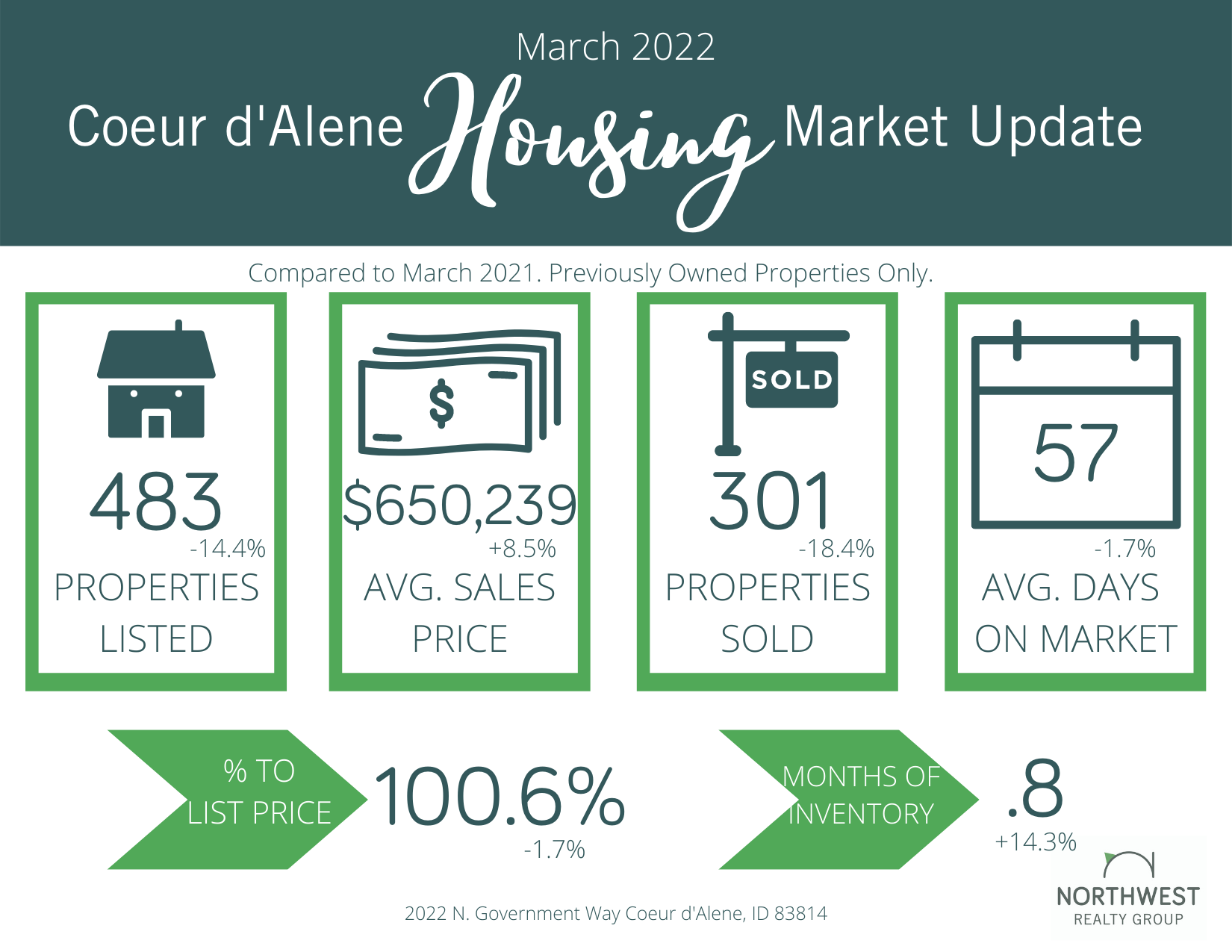
New Listings- 483 down 14.4%

Average Sales Price- $650,239 up 8.5%

Sold Properties- 301 down 18.4%

Average Days on Market- 57 down 1.7%

Percentage to list price- 100.6% down 1.7%

Months Supply- .8 up 14.3%

Stats are compared to March 2021 previously owned properties only in Kootenai County.️


It's no secret home prices have increased at a rapid rate. New construction properties and previously owned properties have nearly doubled in a couple of years.


Interest rates are rising and due to continue throughout the year. This is expected to slow down the housing market. We are starting to see the effects of it now. We have a long way to go to be considered a balanced market but it's a small step in that direction. If you're looking to sell, I recommend doing it now to take advantage of this market. If you're a buyer, you may actually get a chance to negotiate.


Laurel Jonas- REALTOR®

Northwest Realty Group

2022 N. Government Way Coeur d'Alene, ID 83814

208-758-9000

208homesforsale@gmail.com

208homesforsale.com


Posted in Market Updates
March 24, 2022

A 3 Step Downsizing Plan

3 step downsizing plan_Laurel Jonas Blog

When it's time to move to a smaller home, these tips will help you save the memories while minimizing clutter in your new place. Moving into a new house is often bittersweet. You are excited for the change, but sad to leave a home so full of memories. Downsizing can be even harder. A smaller place means you don’t have room for all of your current possessions. But downsizing is also an opportunity to refresh and start anew. If you get rid of the clutter, you can fill your new place with the things you really love that make it feel like home. Here are three steps for downsizing without sacrificing your meaningful belongings:


1. Make a plan


Take a trip to your new place and measure the size of your rooms and storage areas. This will be your guide for how much you can take with you. It is better to underestimate than overestimate. As you’re deciding what to keep and what to get rid of, do one room at a time. Moving is a big job, and you don’t need to tackle it all at once. Plan to do a little bit each day and leave extra time so you aren’t rushed. Decide on your furniture first. Going from big to small will give you a better idea how much space you have left to fill. You don’t want to have to reshuffle everything if you can’t take that bookshelf with you.


2. Sort your belongings


Will you use it? It’s easy to convince yourself you might still wear that 10-year-old shirt with the tags still on someday. But if you haven’t used it in the past year, it’s likely you never will. Also, get rid of multiples. Do you have multiple coffee pots, or several sets of china? If you can only use one at a time, you don’t need to keep both. As you sort, follow a strict yes/no policy —no “maybes” allowed. Make a “yes” pile and a “no” pile, and force yourself to choose. If you aren’t convinced the item deserves a yes, then it’s a no. “Maybe” piles just mean more work for you later.


Decide how to divide up your “no” pile. You may not want or need these items anymore, but they’re probably useful to someone else. Special items may be handed down to friends or family members. Furniture, housewares, clothing, and other items in good condition could be sold at a garage sale or on sites like Facebook Marketplace or Craigslist. Or you can choose to donate reusable items to organizations like Goodwill, who sometimes offer neighborhood or even residential pickups, making your task that much simpler. Anything damaged or worn beyond repair should make its way to the recycling bin or a trip to the dump.


3. Preserve memories


Digitize photos to save space and easily share them with family. Photo albums take up a lot of room, and how often do you actually go through them? Pick up a digital frame and enjoy all of your photos in a rotating slideshow or create a slideshow screensaver for your TV or computer. Take photos of items that bring up good memories, but you no longer have room for. You can look back on the memories without actually keeping the items. To make sure those treasured items are in good hands, pass them on to your children, grandchildren, or close friends. They will love the gift, and you get to enjoy seeing the items being used. Another strategy is to give keepsakes a new life. If you love to craft, items like old movie stubs, letters and photos are perfect for scrapbooking, letting you create a record of your experiences. Or make three-dimensional pieces of art using shadow boxes. Gathering up your memories in one place will make them easier than ever to enjoy.


Downsizing is an emotional process. You will discover items you haven’t seen in years, and you will have to decide what to do with them. Give yourself some time to reminisce, and then make a decision. Keep in mind your space limitations. Take with you what is truly valuable — only you can decide what you can’t do without. Just imagine: Once you’ve finished your move, you’ll be able to enjoy your new place surrounded by the feeling of home.


Laurel Jonas- REALTOR®

Northwest Realty Group

2022 N. Government Way Coeur d'Alene, ID 83814

208-758-9000

208homesforsale@gmail.com

208homesforsale.com

Posted in Selling Tips