Enjoy helpful home buying and selling tips as well as market updates, community events and local love.

March 14, 2024

The Role of Technology in Shaping the Future of Real Estate

The role of technology blog post_Laurel Jonas Blog

The Role of Technology in Shaping the Future of Real Estate


Technology is rapidly transforming various industries, and real estate is no exception. From online listings to virtual reality tours, technology is playing a pivotal role in shaping the way we buy, sell, and market properties. In this post, we will explore the key ways in which technology is revolutionizing the real estate industry and its potential impact on the future.


  1. Online Listings and Virtual Tours: Gone are the days of relying solely on physical showings to view properties. Online listings and virtual tours have become increasingly popular, allowing potential buyers to explore homes from the comfort of their own homes. High-quality photos, 3D tours, and even virtual reality experiences provide a more immersive and convenient way to view properties, saving time for both agents and buyers.

  2. Data and Analytics: Technology has made it easier than ever to gather and analyze real estate data. With the help of advanced algorithms and artificial intelligence, real estate professionals can access market trends, property values, and demographic information with just a few clicks. This data-driven approach allows for more informed decision-making when it comes to pricing, marketing, and investing in properties.

  3. Mobile Apps and Digital Transactions: Mobile apps have revolutionized the way real estate transactions are conducted. From searching for properties to submitting offers and signing contracts, everything can now be done digitally. This not only streamlines the process but also allows for greater flexibility and accessibility, enabling transactions to take place anytime, anywhere.

  4. Smart Home Technology: The rise of smart home technology has transformed the way we interact with our living spaces. From voice-activated assistants to connected appliances and security systems, smart homes offer convenience, energy efficiency, and enhanced security. As this technology becomes more affordable and widespread, it is likely to become a major selling point for properties in the future.

  5. Blockchain and Secure Transactions: Blockchain technology has the potential to revolutionize real estate transactions by providing secure and transparent platforms for buying, selling, and recording property ownership. Smart contracts, powered by blockchain, can automate and streamline the process, reducing the need for intermediaries and minimizing the risk of fraud.

Bottom Line


As technology continues to advance, its impact on the real estate industry will only grow stronger. Online listings, virtual tours, data analytics, mobile apps, smart home technology, and blockchain are just a few examples of how technology is shaping the future of real estate. By embracing these advancements, real estate professionals can stay ahead of the curve, provide better experiences for their clients, and unlock new opportunities in an increasingly digital world.


Laurel Jonas

208-758-9000

208homesforsale@gmail.com

208homesforsale.com

Posted in Home Tips
March 5, 2024

February 2024 Coeur d'Alene Idaho Real Estate Market Update

February 2024 Coeur d'Alene Idaho Real Estate Market Upate

➡️New Listings: 200 Up 3.6%

➡️Pending sales: 152 Up 6.3%

➡️Closed Sales: 108 Down 2.7%

➡️Days on Market Until Sold: 91 Up 19.7%

➡️Percent to List Price Received: 97% Up 0.1%

➡️Months of Inventory: 1.9  Stayed the same 0.0%

➡️Average Sales Price: $640,329 Up 13.7%


👉Stats are compared to February 2024- Previously owned properties only in Kootenai County.️


For more Coeur d'Alene Idaho Real estate market information, please call, text or email me.

Laurel Jonas

208-758-9000

208HomesForSale@gmail.com

Northwest Realty Group

Posted in Market Updates
Feb. 29, 2024

The Many Non-Financial Benefits of Homeownership

Non Financial Benefits of Homeownership_Laurel Jonas blog

The Many Non-Financial Benefits of Homeownership


While there are numerous financial benefits to homeownership, it's important to highlight the non-financial advantages as well. As a real estate professional, understanding and conveying these benefits to potential buyers can help them make informed decisions and feel more confident about their investment. Here are some non-financial benefits of homeownership:

  1. Stability and Security: Owning a home provides a sense of stability and security. Homeowners have control over their living space, allowing them to create a long-term living environment that suits their needs and preferences. They don't have to worry about lease renewals or landlord decisions that may disrupt their living arrangements.

  2. Pride of Ownership: Homeownership often brings a sense of pride and accomplishment. Being able to personalize and improve their own property gives homeowners a sense of ownership and satisfaction. They can create a space that truly reflects their style and personality, which can contribute to a greater sense of well-being.

  3. Community Involvement: Homeownership often fosters a stronger connection to the community. Homeowners tend to have longer-term residency, which allows them to develop relationships with neighbors and become more involved in local activities and organizations. This sense of belonging can lead to a higher quality of life and a greater sense of community.

  4. Educational Opportunities: Studies have shown that homeownership can positively impact educational outcomes, especially for children. Stable housing can provide a conducive environment for learning and development. Homeowners often have access to better school districts and can take advantage of educational resources within their community.

  5. Health and Well-Being: Homeownership has been linked to improved health and well-being. Homeowners often have better physical and mental health outcomes compared to renters. The stability and control that homeownership provides can contribute to reduced stress levels and an overall improved quality of life.

  6. Long-Term Wealth Building: While this is a financial benefit, it's worth mentioning as it has long-lasting non-financial implications. Homeownership is often considered a form of forced savings, as mortgage payments build equity over time. This can provide a sense of financial security, as homeowners accumulate wealth that can be tapped into in the future.

  7. Emotional Stability: Having a place to call home can provide emotional stability and a sense of belonging. Homeownership can create a foundation for personal and family growth, stability, and emotional well-being.

By highlighting these non-financial benefits, you can help potential buyers see the value of homeownership beyond just the financial aspects. Understanding their personal goals and priorities can help guide them towards making the right decision and finding a home that meets both their financial and non-financial needs.


Laurel Jonas

Northwest Realty Group

208homesforsale@gmail.com

208homesforsale.com

Posted in Buying A Home Tips
Feb. 15, 2024

Should I Take An All-Cash Offer On My House?

Should i take an all cash offer on my house_Laurel Jonas blog

Should I Take An All-Cash Offer On My House?


Selling your house “for cash” doesn’t mean you’re trading it for a briefcase full of hundred-dollar bills, like in the movies. Rather, a buyer who makes an all-cash offer has enough liquid funds to cover the full price upfront. Instead of financing the purchase with a mortgage loan, the buyer will simply pay you directly, just as if they were buying anything else.

These offers have become increasingly common in today’s hot housing market. In fact, a recent study found that one-third of U.S. home purchases were made in cash earlier this year, the highest share in almost 10 years. While an all-cash offer might sound appealing to sellers, these deals can be complicated. Here’s what to know before you accept one.

Should you accept an all-cash offer to sell your house?
Whether your buyer pays in cash or is financing the purchase, you’ll get paid either way. However, accepting an all-cash offer can speed up the process significantly, since you don’t have to wait on lender underwriting and approval. Plus, all-cash offers are less likely to fall through, since your buyer isn’t relying on a loan application that could be denied. If you are lucky enough to have multiple offers, a cash one can certainly be more appealing than one that hinges on a lender’s eventual approval.

That said, there are downsides too. Cash offers are often lower than finance-contingent ones — a “discount” cash buyers can give themselves, since they know they’re making things faster and more efficient for you. And you’ll need to be wary of scammers who prey on what they perceive as desperation of buyers seeking a quick cash sale to resolve financial difficulties.

Ultimately, deciding whether an all-cash offer is right for you will depend on whether you want to sell as fast as possible. If your main concern is simply getting the property off your hands and collecting the cash, it’s a great option. But if you have the time and want to aim for top dollar, you might get a better offer from a buyer who’s financing.

Who buys a house with cash?
Cash transactions often take place in markets where homes are extremely affordable, making it more likely for buyers to have the full amount available, or in markets where deep-pocketed individuals might be looking for investments or second homes. 

All-cash buyers typically fall into one of the following categories:

  • Traditional homebuyers: A traditional buyer with lots of liquid funds available might prefer to make an all-cash offer, saving the hassles associated with financing and eliminating the substantial expense of interest on a long-term loan.

  • Cash-home buying companies: You might have seen TV spots and road signs advertising local or even nationwide homebuying companies. These operations usually have slogans like “we buy any home” or HomeVestors’ “we buy ugly houses.” They buy homes in almost any condition and can close the deal very quickly, but they typically offer a low-end price.

  • iBuyers: Similarly, online iBuyers can make cash offers and close deals with lightning speed. Also similarly, the offer you get from one likely won’t be as high as you could get with a traditional sale. Opendoor and Offerpad are two of the biggest players, but neither one operates in every market in the country.

  • House flippers: These individuals or small companies buy homes in poor condition, fix them up and sell them for a profit. They are unlikely to purchase homes already in good condition

Why all-cash offers are better
While all-cash offers might not earn you the best possible price, they do provide significant perks for sellers:

  • Less waiting: Accepting an all-cash offer means that you avoid time-consuming steps like waiting for the buyer’s financing to be approved, and thus get to the closing table faster.

  • Less paperwork and bureaucracy: Cutting out the lender also means cutting out much of the paperwork and hassles associated with a traditionally financed sale.

  • Less risky: Without financing or a lender-required appraisal contingency, an all-cash transaction is less likely to fall through — cash is more of a sure bet.

  • Less work: Cash offers from iBuyers or homebuying companies often mean you can sell your home as-is, saving you the hassles associated with staging your home and making repairs ahead of listing.


Laurel Jonas

Northwest Realty Group

208homesforsale@gmail.com

208homesforsale.com

Posted in Selling Tips
Feb. 8, 2024

Should Baby Boomers Buy or Rent After Selling Their Houses?

Should baby boomers rent or sell_Laurel jonas blog

Should Baby Boomers Buy or Rent After Selling Their Houses?


The decision of whether Baby Boomers should buy or rent after selling their houses depends on various factors, including personal preferences, financial circumstances, and long-term goals. Here are a few considerations to help make an informed decision:

  • Financial Situation: Assess your financial position, including retirement savings, income, and expenses. Determine if buying another property aligns with your budget and retirement plans.

  • Lifestyle and Flexibility: Consider your desired lifestyle in retirement. Renting offers more flexibility, allowing you to downsize, relocate, or explore different communities without the responsibilities of homeownership.

  • Maintenance and Upkeep: Owning a home comes with maintenance and repair costs. Renting eliminates these responsibilities, making it an attractive option for those seeking a more carefree lifestyle.

  • Market Conditions: Evaluate the local real estate market. Determine if it's a seller's or buyer's market, as this can impact the potential return on investment and affordability of purchasing a new property.

  • Equity and Cash Flow: Selling your house may provide a substantial amount of equity. Consider how this equity can be utilized to generate income or enhance your retirement savings.

  • Tax Implications: Consult with a financial advisor or tax professional to understand the tax implications of buying or renting in your specific situation.

Ultimately, the decision between buying or renting should be based on individual circumstances and preferences. It may be helpful to consult with a real estate agent and financial advisor to explore all available options and make an informed decision.


Laurel Jonas

Northwest Realty Group

208homesforsale@gmail.com

208homesforsale.com

Posted in Buying A Home Tips
Feb. 5, 2024

January 2024 Coeur d'Alene Idaho Real Estate Market Update

January 2024 Coeur d'Alene Idaho Real Estate Market Update

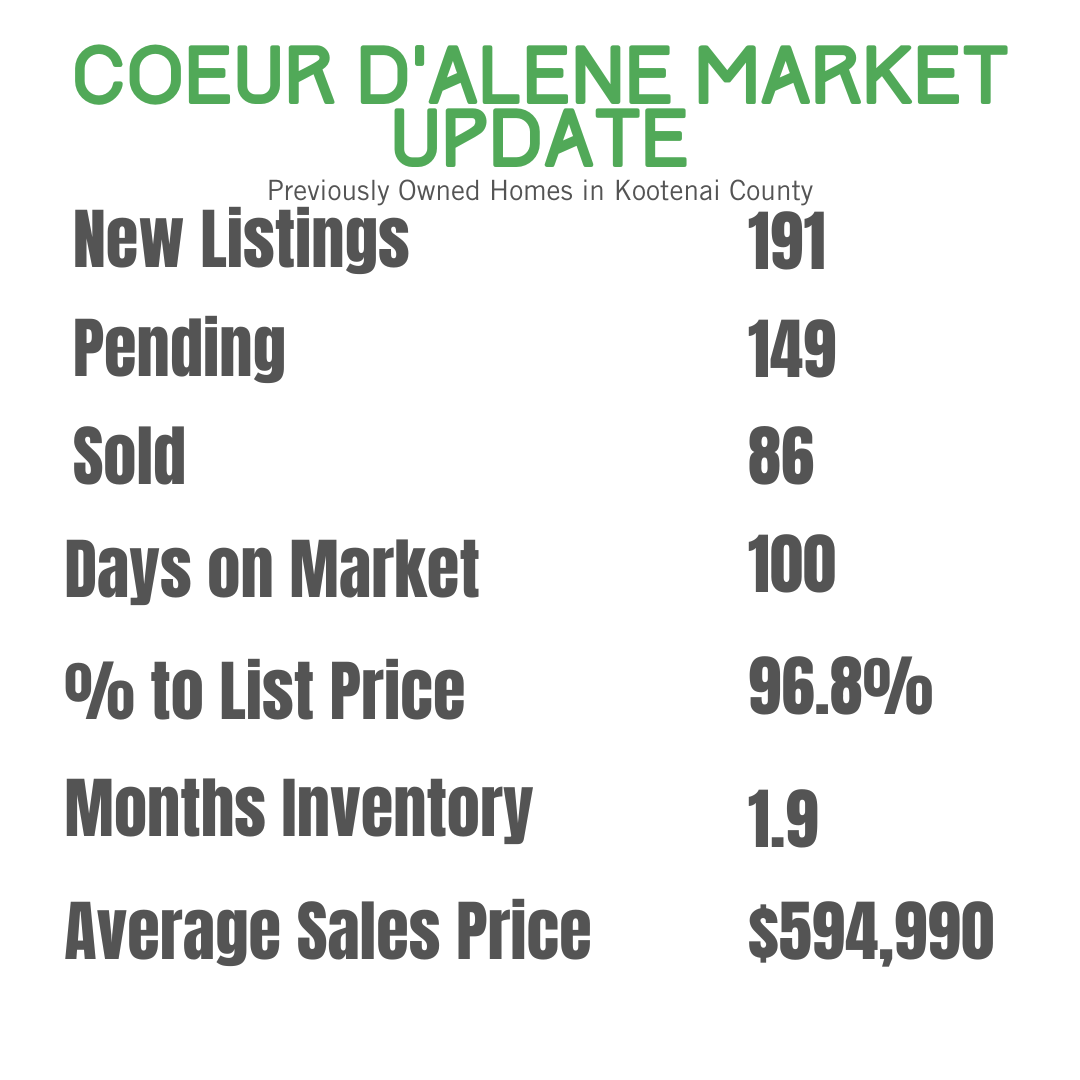
Here's the Coeur d'Alene Idaho Real Estate Market Update. These stats are based on previously owned homes in Kootenai County based on stats from January 2024 compared to January 2023.

New Listings; 191. Up 1.15 from last January

Pending sales; 149. Up 27.4 % from last January

Closed sales; 86. Down 8.5% from last January

Average days on market; 100. Up 19% from last January

Average sales price: $594,990 remained the same from last year

Months of inventory; 1.9. Up 5.6% from last January

Percent to list price: 96.8% Up 0.1% from last January


For more details and information on the real estate market, please contact me.

Laurel Jonas

208-758-9000

208homesforsale@gmail.com

208homesforsale.com

Posted in Market Updates
Feb. 1, 2024

Why Is Housing Inventory So Low?

Why is housing inventory so low_Laurel Jonas blog

Why Is Housing Inventory So Low?

There are several factors contributing to the low housing inventory in many markets:

Strong demand
Low mortgage rates, a growing population, and a robust economy have increased the demand for housing. This has led to more buyers competing for limited inventory, driving up prices and reducing the time homes spend on the market

Lack of new construction
The number of new homes being built has not kept pace with demand. Factors such as labor shortages, rising construction costs, and difficulties obtaining permits and financing have limited new construction activity.

Homeowners staying put
Many homeowners are choosing to stay in their current homes for longer periods, delaying the supply of existing homes for sale. This may be due to factors such as low inventory and the desire to avoid the hassle and costs associated with moving.

Investor activity
 Institutional investors and individuals purchasing homes as rental properties have been active in the market, further reducing the available inventory for sale.

Foreclosure moratoriums
During the COVID-19 pandemic, foreclosure moratoriums were put in place, preventing distressed properties from entering the market. This has contributed to the limited inventory available.

Lack of affordable housing
There is a shortage of affordable housing options, making it challenging for first-time homebuyers and those with lower incomes to find suitable homes. This further restricts the available inventory.

It's important to note that the reasons for low housing inventory can vary by location. Local market conditions, government policies, and demographic trends all play a role. Real estate agents should stay informed about their specific market dynamics to better assist their clients.


Laurel Jonas

Northwest Realty Group

208homesforsale@gmail.com

208homesforsale.com

Jan. 25, 2024

Your Home Equity Can Offset Affordability Challenges

Your Home Equity Can Offset Affordability Challenges

Your Home Equity Can Offset Affordability Challenges


It's important to understand the various ways homeowners can leverage their home equity to overcome affordability challenges. Home equity refers to the portion of the property that you truly own, which is the difference between the property's market value and the remaining mortgage balance. Here are a few ways homeowners can use their home equity to address affordability challenges:

  1. Refinance: Homeowners with a significant amount of equity can consider refinancing their mortgage to take advantage of lower interest rates. By refinancing, they can potentially lower their monthly mortgage payments and improve affordability.

  2. Home Equity Loan or Line of Credit: Another option is to take out a home equity loan or line of credit. This allows homeowners to borrow against their home equity and use the funds to cover unexpected expenses or make improvements that increase the property's value. These funds can help alleviate affordability challenges by providing extra cash flow.

  3. Downsizing: Homeowners who are facing affordability challenges may consider downsizing to a smaller, more affordable property. By selling their current home and using the equity to purchase a less expensive property, they can reduce their monthly expenses and improve affordability.

  4. Renting Out a Portion of the Property: Homeowners with extra space can consider renting out a portion of their property, such as a basement or an accessory dwelling unit (ADU). This can help generate rental income that can be used to offset mortgage payments and improve affordability.

  5. Home Equity Sharing: There are also emerging options like home equity sharing programs. These programs allow homeowners to partner with investors who provide funds in exchange for a portion of the property's future appreciation. This can help homeowners access cash without taking on additional debt and improve affordability.

It's crucial to note that homeowners should carefully evaluate their financial situation and consult with a financial advisor or mortgage professional before making any decisions regarding their home equity. Every situation is unique, and it's important to weigh the pros and cons of each option to ensure it aligns with their long-term goals.

A real estate professional can provide valuable insights by helping homeowners understand the potential benefits and risks associated with leveraging their home equity. By seeking guidance and expertise on these options, it can help clients navigate affordability challenges and make informed decisions about their real estate investments.


Laurel Jonas

208-758-9000

208homesforsale@gmail.com

208homesforsale.com

Posted in Home Tips
Jan. 18, 2024

Get Ready for Smaller, More Affordable Homes

Get ready for smaller more affordable homes

Get Ready for Smaller, More Affordable Homes


In recent years, there has been a growing trend towards smaller, more affordable homes. This shift is influenced by various factors, including changing demographics, economic conditions, and evolving lifestyle preferences. Here are a few reasons why smaller, more affordable homes are gaining popularity:

  1. Affordability: With rising housing costs, many prospective homebuyers are looking for more affordable options. Smaller homes typically come with a lower price tag, making them more accessible to first-time buyers or those on a tighter budget.

  2. Minimalism and Sustainability: The minimalist movement has gained traction in recent years, with people embracing the idea of living with less and reducing their environmental footprint. Smaller homes align with this ethos, as they require fewer resources to build and maintain.

  3. Aging Population and Empty Nesters: As the population ages, some homeowners are downsizing to smaller homes that are easier to maintain and navigate. Empty nesters, whose children have moved out, often find that a smaller home better suits their needs and lifestyle.

  4. Urbanization and Density: In many urban areas, there is a focus on promoting higher density development to accommodate growing populations. Smaller homes, such as townhouses or condos, allow for more efficient use of limited space in urban environments.

  5. Changing Household Structures: The traditional nuclear family is evolving, with more single-person households, couples without children, and multi-generational living arrangements. Smaller homes can be a practical choice for these non-traditional household structures.

It's important to note that the demand for smaller homes may vary by location and market conditions. Real estate professionals should stay informed about local trends and preferences to best serve their clients. Additionally, smaller homes may also present opportunities for real estate agents to target specific buyer demographics and provide tailored services to meet their unique needs.


Laurel Jonas

208-758-9000

208homesforsale@gmail.com

208homesforsale.com

Posted in Buying A Home Tips
Jan. 4, 2024

What Type of Home is Right For You?

What type of home is right for you_Laurel Jonas blog

What Type of Home is Right For You?

There’s a lot to consider when buying a home. You’ve probably asked yourself a million questions already. What’s in my budget? What will my annual tax bill look like? How far am I willing to commute? How are the schools? Of course, that’s all incredibly important. Particularly if you think it might be your forever home.

The next question most people will ask, or should be asking, is what kind of home is right for me? Single family? Condominium? Townhouse? Chateau in the French countryside? So many questions! Over the next few paragraphs, we’ll examine what types of residences, including the most common architectural styles, are available right now to you, the homebuyer.


First, let’s tackle single-family homes. Single-family homes are usually defined as free standing or detached residential structures. There’s some leeway there where properties can be seemingly attached but separated by a wall that extends the full vertical height of the home, roof excluded. As one can imagine, there’s a lot of variety in single-family homes. Several are listed below.

Ranch

A ranch-style home is a single level home. They’re most usually wider than they are tall. There are many reasons to prefer to single level living, including: you don’t want to carry furniture upstairs, you have mobility concerns that make routine stair climbing inconvenient, and/or you prefer an open floor plan that allows you to flow from one end of the square footage to the other without ascending or descending stairs or other obstructions.

Cape Cod


Cape Cods also tend to be single level but not always. This style is most known for its rectangular structure with a side roof that sits lower than the main roof. They’re also known for their compact design so don’t expect vaulted ceilings or oversized rooms. Most rooms are built off a central point in the house, usually a fireplace.

Victorian


If you’ve always dreamed of a library with a sliding ladder, stained glass, a sharp roof, and sprawling gothic staircases, a Victorian might be for you. Named after the era of Queen Victoria, one can easily see high society types in waistcoats and corsets enjoying tea as they discuss the recent developments in the Jack the Ripper case. It’s not uncommon to find remnants of past conveniences like dumbwaiters and large butler’s pantries in these older homes.

Tudor


Tudor homes are most recognizable for the hand-hewn wood beams and cross beams set in masonry, stucco, or elaborate stonework on the exterior of the home. In other words, exposed framing. These homes were very common in the late 19th and early 20th centuries.

Colonial


Colonial homes are about symmetry. They can be made of wood, stone, or brick and feature windows and doors of uniform measurement. Often the windows are accented by shutters and the front door is placed at the center of the home.

Contemporary


Contemporary homes can borrow the best features of older styles but prioritize minimalism. They’re less flashy and thus are often unfairly labeled boring or “cookie cutter.” The fact of the matter is, contemporary homes are some of the most level, symmetrical, and customizable homes available on the current market.

Farmhouse


It’s exactly what you think it is. The exterior of the home can borrow from any of the above styles, but the interior showcases a more rustic, rural, or woodsy style. Imagine exposed wood, low-hanging metal light fixtures, screen doors, and light Earthy color schemes that incorporate brown, grey, off-white, and muted yellows.

Villa


Villa style homes borrow from Spanish, French, and Mediterranean structural styles. They are often secluded or tree-shaded, almost always have a large patio or private courtyard, and roofs that overhang the main structure of the home.

 Okay, so maybe you’re sold on homeownership, but you hate cutting the grass and you generally prefer a lower maintenance lifestyle. A townhome or condo could be for you! Townhomes generally accumulate their square footage vertically. Which is to say, each level is smaller in scale but if you combined the space found across levels, you’d rival that of a detached single-family home. Townhomes can often be found in rows of multiple units in cities and suburban neighborhoods. Condominiums are large, independently owned home units connected to a much larger complex or structure. Both townhomes and condos, because of their close proximity to other units, usually have limited yard or landscaping space. Which, for some is a bonus.

What about a good old-fashioned apartment? If you’re not ready to buy or accept the responsibility of upkeep that comes with a single-family style home, maybe you’re better off renting for the time being. You likely won’t need to worry about outside maintenance or fixing major issues like electrical, plumbing, or structural defects or damage. However, the tradeoff is the lack of ability to customize or renovate as you see fit. Some landlords prohibit painting walls, keeping pets, or playing music above a certain decibel limit. After all, they want to protect their investment.

Right now is a great time to buy a home. Just do your research! Find the home that best suits your needs. For extra guidance, consult your local real estate professional.


Laurel Jonas

208-758-9000

208homesforsale@gmail.com

208homesforsale.com

Posted in Buying A Home Tips